Kanha Tiger Reserve
Days One & Two - India - 2024
Three game drives in search of tigers at Kanha Tiger Reserve in Madhya Pradesh.
1. Kanha Red-Wattled Lapwing
A red-wattled lapwing stands beside a small pond in Kanha Tiger Reserve - these ground birds are sometimes called the “did-he-do-it” bird because of their distinctive warning call.
This may be a simple photograph of a bird, but -oh, man!- did it take one gargantuan effort to be able to take it! (You know, I've always liked that word “gargantuan” ... so rarely have an opportunity to use it in a sentence.)
Getting to Kanha Tiger Reserve took three very full travel days from the East Coast of the United States: first, an overnight flight to Dubai; second, after spending the morning finally ascending the Burj, an evening flight into Delhi; and, third, a morning flight from Delhi down to Jabalpur, followed by a three-hour van transfer to our incredible accommodation, Kanha Jungle Lodge, where we had our first of many amazing meals prepared by the hotel’s in-house cook, Chef Raghu.
By the time you endure all of this punishment to your body, mind, and soul, the idea of a pre-dawn wake-up to undertake the day’s first safari drive is -surprisingly- an agreeable one. You don’t fight it any longer, you lack the will to care. All the same, there are three types of travel events in particular that get me pumped up -wildlife photography, hiking, and eclipses- and, well, I’d probably be excited even if I had to walk from Delhi to Kanha.
My two travel companions and I had our own private jeeps reserved for the entirety of the trip and they were kind enough to give me the back row which allowed me to have a place to put down Lenszooka between encounters. I could also photograph behind the jeep, which proved most useful on a few occasions.
The gates at all Indian tiger reserves open at sunrise and it is imperative you arrive promptly in order to increase your odds of an animal encounter. Despite being … well, India … it was a surprisingly brisk morning. The jeeps here and at the other game parks we’d visit had heated water bottles and blankets to help overcome the cold, especially during the wait for the drivers and guides to sort out their entry permits and other paperwork. Soon, we were off on the first of seven total game drives in India, and the first of three at Kanha.
Having only undertaken African wildlife safaris, my mind couldn’t help but immediately compare and contrast the two. First off, the vehicles used are totally different: in India, you can opt for a small two-row open-top Jeep as we did, or an exceptionally large (think bus-sized) open-top truck called a canter, while in Africa, the three row canvas-top 4x4 is pretty much standard. The benefits of the smaller jeep are more obvious: greater maneuverability, an unobstructed view around the vehicle, and fewer passengers to contend with (I’ll admit, however, we were lucky to have only three passengers as we saw many jeeps packed with six passengers which, frankly, looked downright uncomfortable.)
The second obvious different between Indian and African safaris is the level of difficulty in spotting wildlife: for the most part, African game parks are wide-open savannas which make finding even individual animals relatively easy, while in India the forest is so thick and dense, you can hardly see anything beyond a few meters past the dirt track.
The third and certainly most important difference between Indian and African safaris is the ability to improvise: while African game drive trucks can travel pretty much anywhere, Indian jeeps and canters are restricted to a limited number of comparatively narrow and far apart dirt tracks.
Particularly as a result of the second and third differences, Indian wildlife spotting is incredibly difficult compared to wildlife spotting in Africa and requires an insane amount of patience. Wildlife -namely tigers and sloth bears- need to be spotted within a very short distance of the dirt road you happen to be on, and if you miss your chance to see that animal, it may disappear into the deep forest for the remainder of the day.
While all the guides we had were top-notch, there is -ultimately- only so much that they can do to help the situation. Unlike Africa (where guide communication by radio is commonplace), Indian guides rely on animal footprints, and -yes- passing vehicles which relay information about potential sightings. For the most part they are armed only with their vision, intuition, and experience.
Our first drive in Kanha Tiger Reserve was about four hours long, and we spent the majority of it circling around a small area after our guide spotted some fresh tiger tracks. We hoped the tiger would emerge at some point but -alas- it did not. It did afford us the opportunity to spot lots of birds and quadrupeds at a small pond in the middle of this circular area.
Eleven photographs from our morning game drive follow.
2. Kanha Little Cormorant
A little cormorant perched on a branch - similar to the Indian cormorant, a key distinction of the little cormorant is the lack of hook in its beak.
3. Kanha White-Throated Kingfisher
A white-throated kingfisher sits atop a dead tree.
4. Kanha Elephant Ranger
Animal control officers in Kanha Tiger Reserve often patrol the dense forest on the back of elephants; while tiger attacks against elephants do occur (such as in a famous 2004 attack in Kaziranga National Park), it is no doubt safer than proceeding on foot.
5. Kanha Yellow-Footed Green Pigeon
The yellow-footed green pigeon is the official bird of the Indian state of Maharashtra.
6. Kanha Sambar #1
The sambar is a deer species considered threatened ecologically; Kanha Tiger Reserve is considered one of the best places to see them in the wild.
7. Kanha Gray Langur #1
Considered holy in the Hindu religion, you can see northern plains gray langurs both in the wild and in large population centers.
8. Kanha Hoopoe #1
Despite its name, the Eurasian hoopoe can be found in Africa in addition to Europe and Asia.
9. Kanha Indian Jackal #1
An Indian jackal rests calmly in a meadow.
10. Kanha Sambar #2
The horns of a male deer -likely a sambar- can be seen poking above Kanha Tiger Reserve’s tall grass.
11. Kanha Indian Jackal #2
A happy-looking jackal is intrigued by our presence!
12. Kanha Sambar #3
A group of sambar lounge in a meadow.
Our first game drive was exciting, no doubt, and a great introduction to wildlife spotting in India but admittedly didn’t result in any tremendous sightings. We headed back to our lodge for lunch and a quick siesta before heading out for our afternoon game drive.
13. Pattewala #1
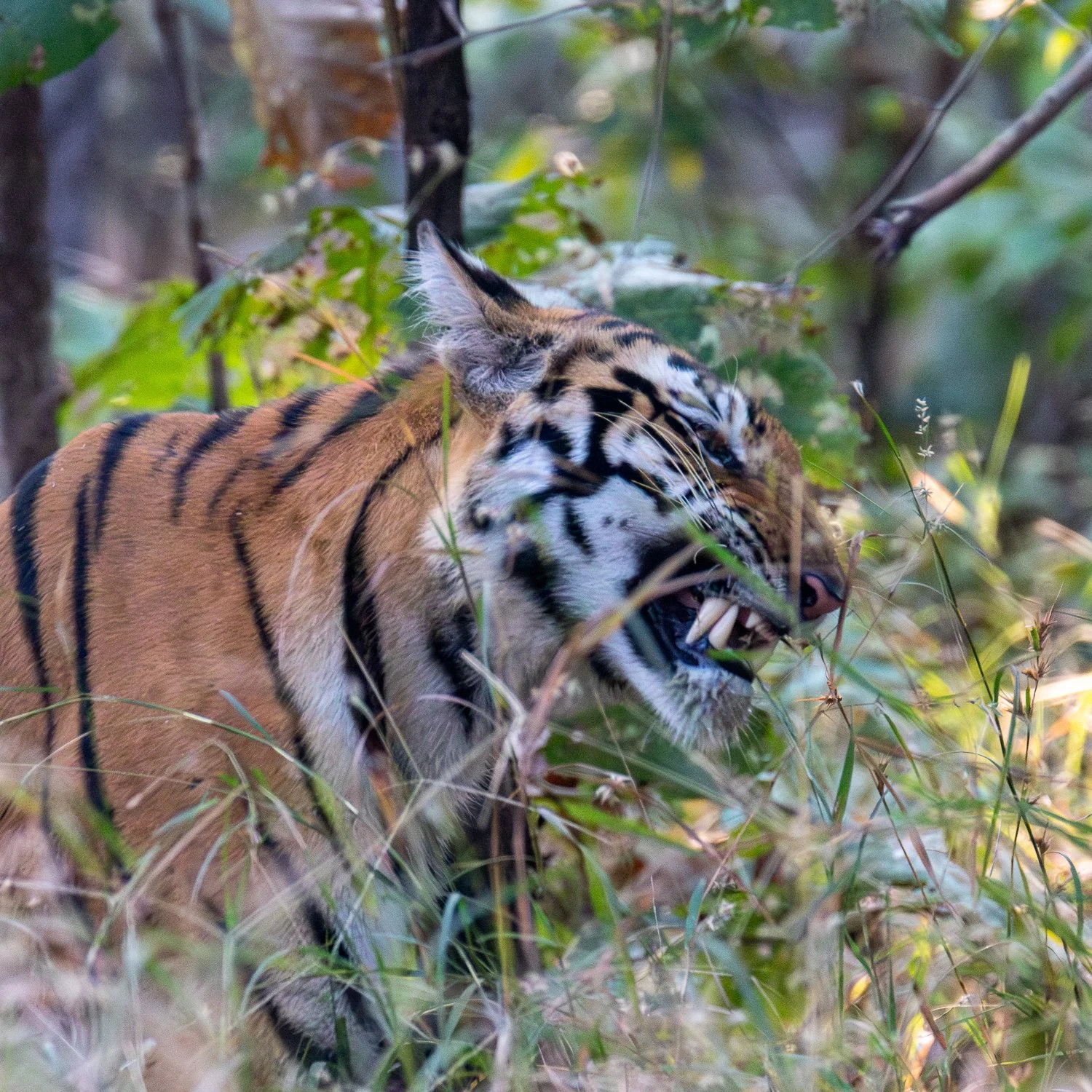
The tiger Pattewala emerges from the thick forest of Kanha Tiger Reserve.
Following lunch, we headed back into the park for a three-hour drive. The first 90 minutes or so of the drive was incredibly uneventful - I even felt bad for my travel companions having traveled for three days to join me on this boondoggle. Before long, however, there was a flurry of conversations between the various guides as we passed one another along a track. Naturally, I had no idea what they were saying (surprise, I don’t speak Hindi), but I could tell something big was about to happen.
Our driver drove rather hastily over to a dirt road and we paced back-and-forth. Before too long, we heard quite a bit of commotion and shouting, broken up by the aggressive starting, reversing, and accelerating of what seemed like a dozen jeeps and a couple of canters.
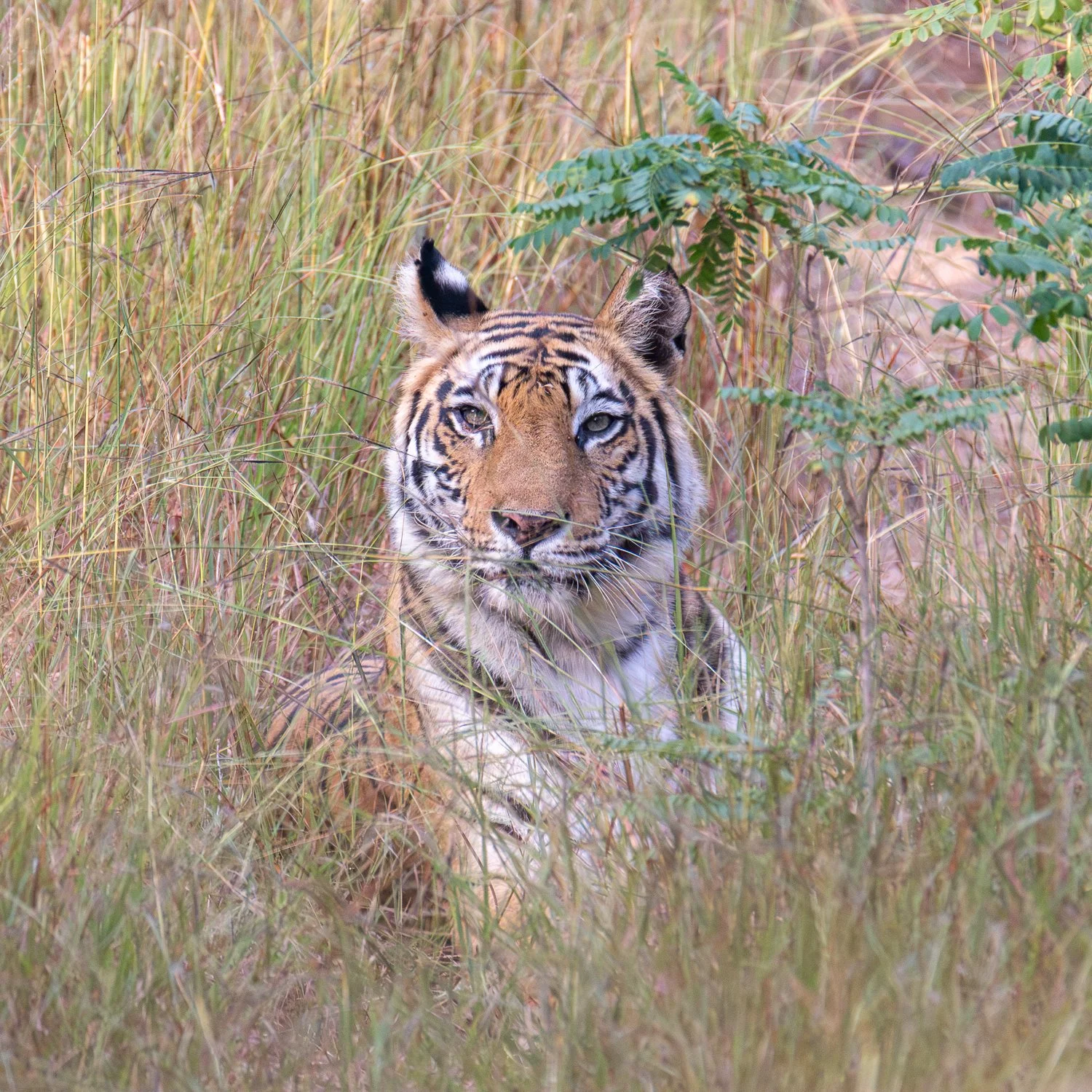
Just off the track -maybe a few meters away in the thick undergrowth of the jungle- the giant male tiger Pattewala emerged briefly, passing into a clearing before turning back into the thickets.
14. Pattewala #2
Pattewala was seemingly abandoned by his mother, and was raised by rangers before being released into the wild.
15. Pattewala #3
The name Pattewala refers to the GPS tracking collar fitted on him by the rangers to track his movements; being raised outside of the wild, he was particularly vulnerable in his first few months away from human contact.
Our guide-driver team pushed down the road a little bit, knowledgeable of a small clearing in which Pattewala would be visible once again. He lumbered towards the clearing, which was a bit behind us and to the right side of the vehicle. For better or worse, another jeep jumped into the smallest of gaps between us and the clearing, its windscreen effectively blocking my view. Unable to stand up in case the jeep needed to move again, I could only watch this majestic animal once again disappear into the forest, not to be seen again.
The repositioning of jeeps on an Indian safari during a tiger sighting is one of the most chaotic, frenetic things I’ve ever experienced. As mentioned previously, the tracks are really quite narrow, and under normal circumstances two jeeps passing one another have very limited room to pass. When a dozen jeeps descend into a tiny area and jockey for position, it can only be described as absolute madness! The whole experience -the tiger, the electricity in the air, the desperation on the parts of the drivers and guides to have the best position possible- is why I absolutely love wildlife safaris!
In that moment, I felt a tremendous relief, comfortable in the knowledge that my co-travelers had seen a tiger and this whole affair was worth the price of admission.
16. Kanha Gray Langur #2
A gray langur walks along a tree branch.
Riding the high of our first tiger encounter, we circled the area around Pattewala in the event he reemerged. In the meantime, we spotted some other wildlife …
17. Kanha Dhole #1
A dhole walks across a field - endangered, breeding dholes are more rare in the wild than tigers.
… Including this dhole which -in the moment- I didn’t realize is actually a significantly more rare animal to spot in the wild than a tiger!
18. Kanha Dhole #2
A second dhole confidently crosses the dirt track.
19. Kanha Gypsies
Small open-topped off-road vehicles called gypsies are the most common safari vehicles in Indian game parks.
An incredibly exciting 90-minutes of game drive concluded, we headed back to our lodge for dinner and an early evening. We’d have one more game drive in Kanha the following morning and wanted to be on our A-game.
We don't run ads - your follow on Instagram
lets us know how we're doing!
Thanks for your support!
20. Kanha Ranger Station
Guides leave the ranger station after receiving their truck assignments.
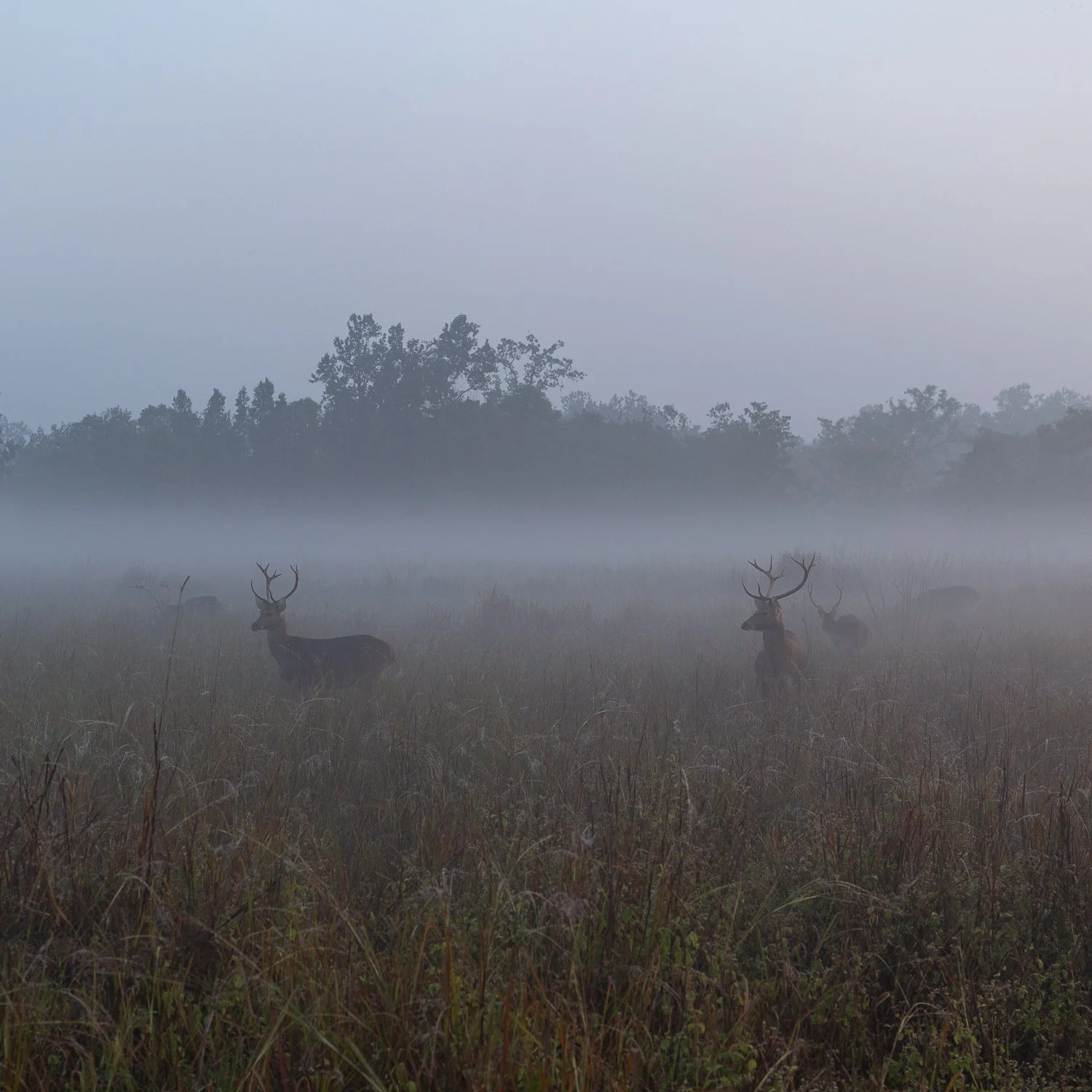
The following morning we rose again for one last game drive in Kanha Tiger Reserve. The weather was crisp and there was quite a bit of dampness in the air. Our guide told us we’d spend the morning looking for barasingha, a famous swamp deer steeped in lore throughout Indian history and culture but increasingly rare outside of Kanha.
Fifrteen photographs follow from our time at sunrise searching for the barasingha.
21. Kanha Sunrise #1
22. Kanha Sunrise #2
23. Kanha Sunrise #3
24. Kanha Sunrise #4
25. Kanha Sunrise #5
26. Kanha Sunrise #6
27. Kanha Sunrise #7
28. Kanha Sunrise #8
29. Kanha Sunrise #9
30. Kanha Sunrise #10
Barasingha -large deer similar to samba- congregate in a meadow, ever watchful of potential predators.
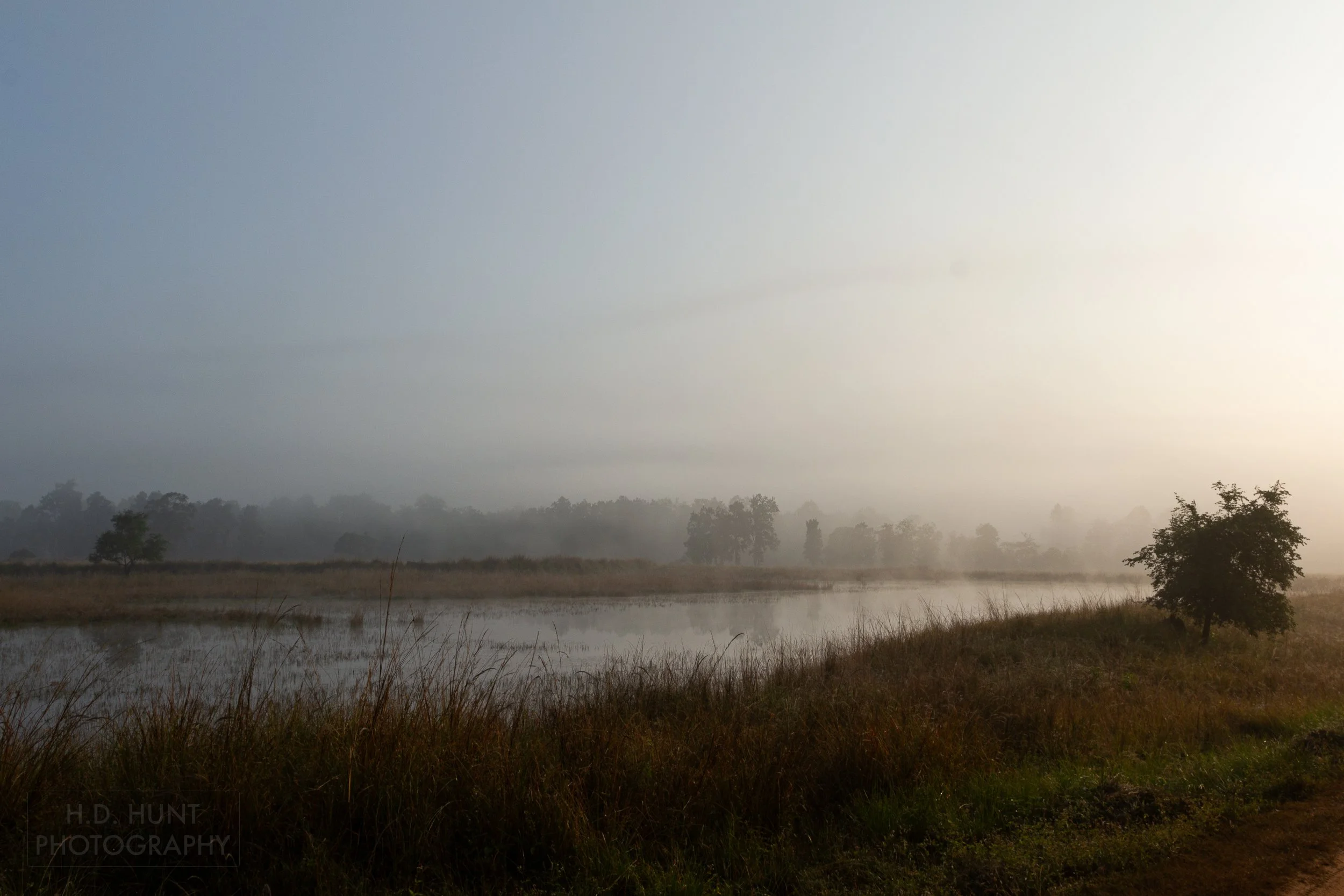
Sure enough, the barasingha were congregated in a field which was covered with a beautiful layer of fog which had yet to be burned off by the morning sun.
31. Kanha Sunrise #11
32. Kanha Sunrise #12
Otherwise known as swamp deer, barasingha are considered ecologically vulnerable.
33. Kanha Sunrise #13
Kanha Tiger Reserve is considered to be one of if not the best place to see barasingha in the wild.
34. Kanha Sunrise #14
35. Kanha Sunrise #15
36. Kanha Sambar #4
A sambar reaches for a treat in a tree.
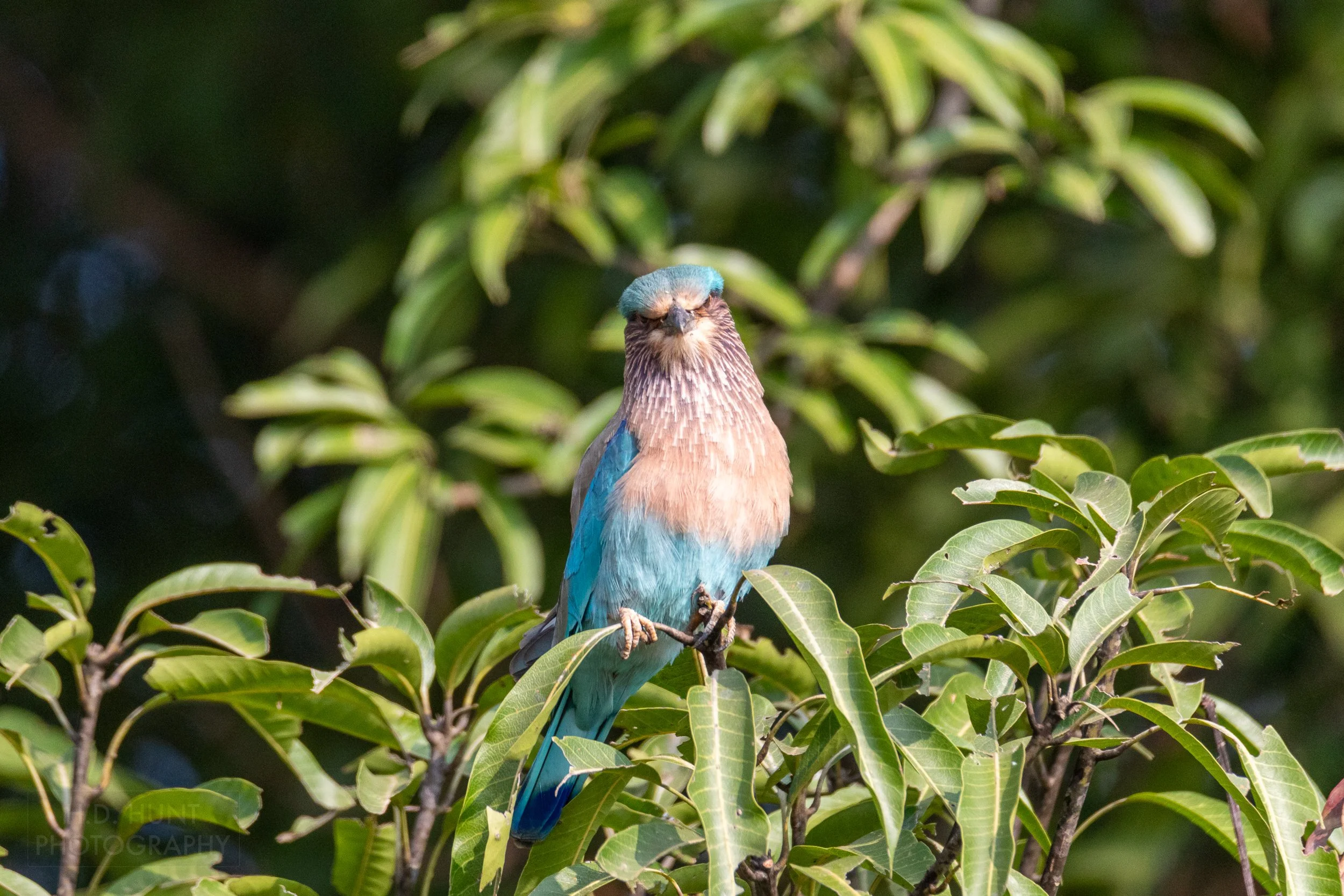
The sun having risen, we pressed forward in our quest to make some additional animal sightings. With a tiger out of the way, that left three major animals on my “to see” list: a leopard, a sloth bear (both rare in Kanha), and an Indian roller bird. Consider this a spoiler warning….
37. Kanha Indian Roller #1
So esteemed are Indian rollers that they are the state bird of three Indian states: Karnataka, Odisha, and Telangana.
Not long after the sun had creeped above the horizon did we spot an Indian roller. I was beyond ecstatic! Rollers are my favorite birds and I’ve been lucky in the past to spot lilac-breasted rollers in Africa.
Another four photographs from our Indian roller encounter follow.
38. Kanha Indian Roller #2
39. Kanha Indian Roller #3
40. Kanha Indian Roller #4
41. Kanha Indian Roller #5
42. Kanha Peacock #1
A male Indian peafowl -known better as a peacock- emerges from the forest.
Shortly after seeing the roller, we came across a wild peacock strutting through a clearing.
43. Kanha Peacock #2
The male peafowl -with its bright blue neck and long train of tail-feathers- is the national bird of India.
44. Kanha Pygmy Goose
A cotton pygmy goose rests on a small pond; while females have a dark eye stripe, males have an all-white face.
The remainder of the game drive (about four hours total) was fairly uneventful … at least compared to sightings of tigers, dholes, and Indian rollers!
45. Kanha Alexandrine Parakeet
An Alexandrine parakeet; similar to the more-common rose-ringed parakeet, Alexandrine males feature pink on the back of the neck and on the back of the wing.
46. Kanha Indian Jackal #3
An Indian jackal stands watch; while predominantly scavengers, Indian jackals have been known to occasionally hunt small game.
47. Kanha Gray Langur #3
Gray langurs sunning in the road.
48. Kanha Sambar #5
A sambar deer completely unaffected by close human contact.
49. Kanha Hoopoe #2
A close-up of a Eurasian hoopoe.
Following this hoopoe encounter, our time at Kanha Tiger Reserve had come to an end. I have neglected to mention to this point that I hadn’t originally planned to come as far as Kanha; instead, I had planned for us to visit Bandhavgarh National Park, as well as Ranthambore National Park near Jaipur, but our tour organizer, Harsh, told us we just had to visit Kanha Tiger Reserve. I am certainly glad he made the recommendation to do so! Not only was our first tiger encounter truly special, we got to see super-rare dholes, an Indian roller, and Barasingha. On top of that, the lodge was seriously top-notch. I can say without hesitation that I would come back here!
For better or worse, we had to make our way to Bandhavgarh National Park. We piled into our tour van and made the nearly six-hour journey (!) to Tala, our home for the next two nights.