Reynisfjara, Skógafoss, & Seljalandsfoss
Day Seven - Iceland - 2025
A visit to the world’s most dangerous beach, followed by stops at some of Iceland’s greatest waterfalls.
1. Reynisfjara #1
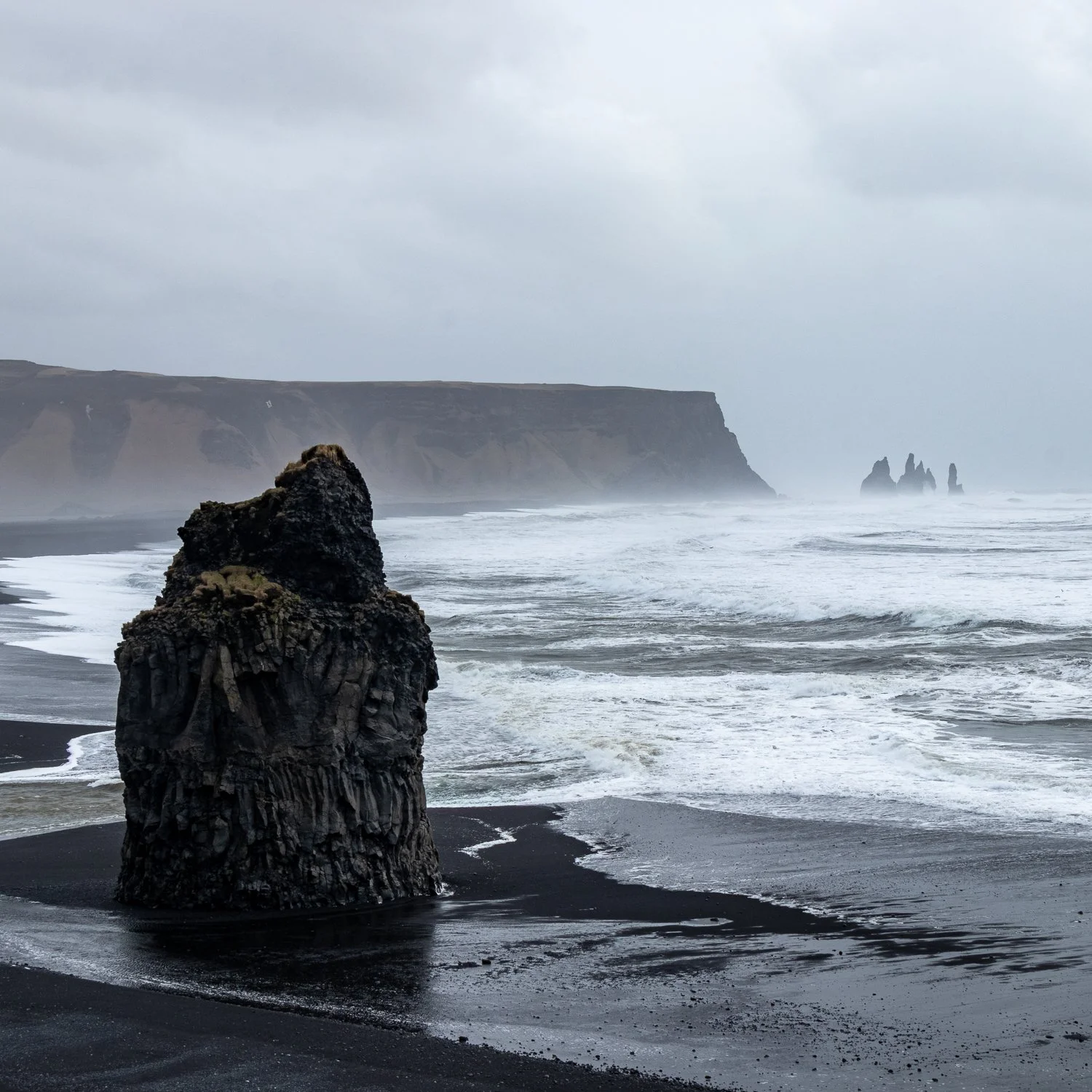
Reynisfjara is a black sand beach near Vík í Mýrdal which receives over 500,000 visitors a year; it is subject to tremendously dangerous “sneaker waves,” a generally unexplained phenomenon where a wave in a wave train will be significantly larger than those waves that precede and follow it.
The following morning, we all saddled up in the rental van and made our way back to the southern coast for some additional sightseeing. On the way out to the ice caves, we had deliberately skipped seeing some waterfalls and the famous Icelandic black sand beaches since our fifth travel companion had wanted to see them (it would have also made for an incredibly long day, if I’m honest….) Departing early, we started first at Reynisfjara, the most famous of these black sand beaches and -arguably- the most dangerous beach in the world.
The wind here was absolutely incredible and waves crashed violently against the columnar cliffs. Occasionally, impossibly large sneaker waves would creep up the beach, so lots of in-depth exploration was out of the question.
I’ll just say I am very, very thankful we visited Reynisfjara at the time of day we did - as you’ll see below, things got a little bit out of hand just a couple hours after we visited:
Let me get this out of the way right now: Reynisfjara is an incredibly dangerous place to visit and -most unfortunately- people have died here, often by being crushed against the nearby cliffs or swept out to sea. There is a color-coded warning sign as you approach the beach indicating the current situation - please make every attempt to follow its advice and do not do anything which will put your life in danger. I assure you, it is not worth it.
Editor’s Comment: Many thanks to Íris Guðnadóttir for posting this video. It really goes above and beyond highlighting the potential dangers of visiting this beach. One of my travel companions discovered this video the following morning and we were all absolutely blown away by how quickly the situation deteriorated. As an aside: in conducting research for this page I discovered a news article which interviewed none other than Íris Guðnadóttir; according to the article, her family has farmed the area for 200 years and she is now one of the landowners near Reynisfjara. You can imagine my pleasantly surprised face when I dug up this video and discovered it was made by the same person!
2. Reynisfjara #2
3. Reynisfjara #3
4. Reynisfjara #4
5. Dyrhólaey #1
The foreground Arnardrangur -Eagle Rock- is so named due to the birds which nest here, while the sea stacks of Reynisdrangar are -according to legend- a ship and two trolls turned to stone by the sun.
Not long after arriving at Reynisfjara, we sought refuge in our rental van and made our way the short distance to Dyrhólaey, which -thankfully!- is an overlook high above the cold North Atlantic waters. The wind was howling, though, and at points it was definitely hard to move!
Five more photographs from Dyrhólaey follow.
6. Dyrhólaey #2
7. Dyrhólaey #3
8. Dyrhólaey #4
9. Dyrhólaey #5
10. Dyrhólaey #6
Pretty much done with the wind by this point, we made our way back inland to visit a handful of waterfalls.
11. Kvernufoss #1
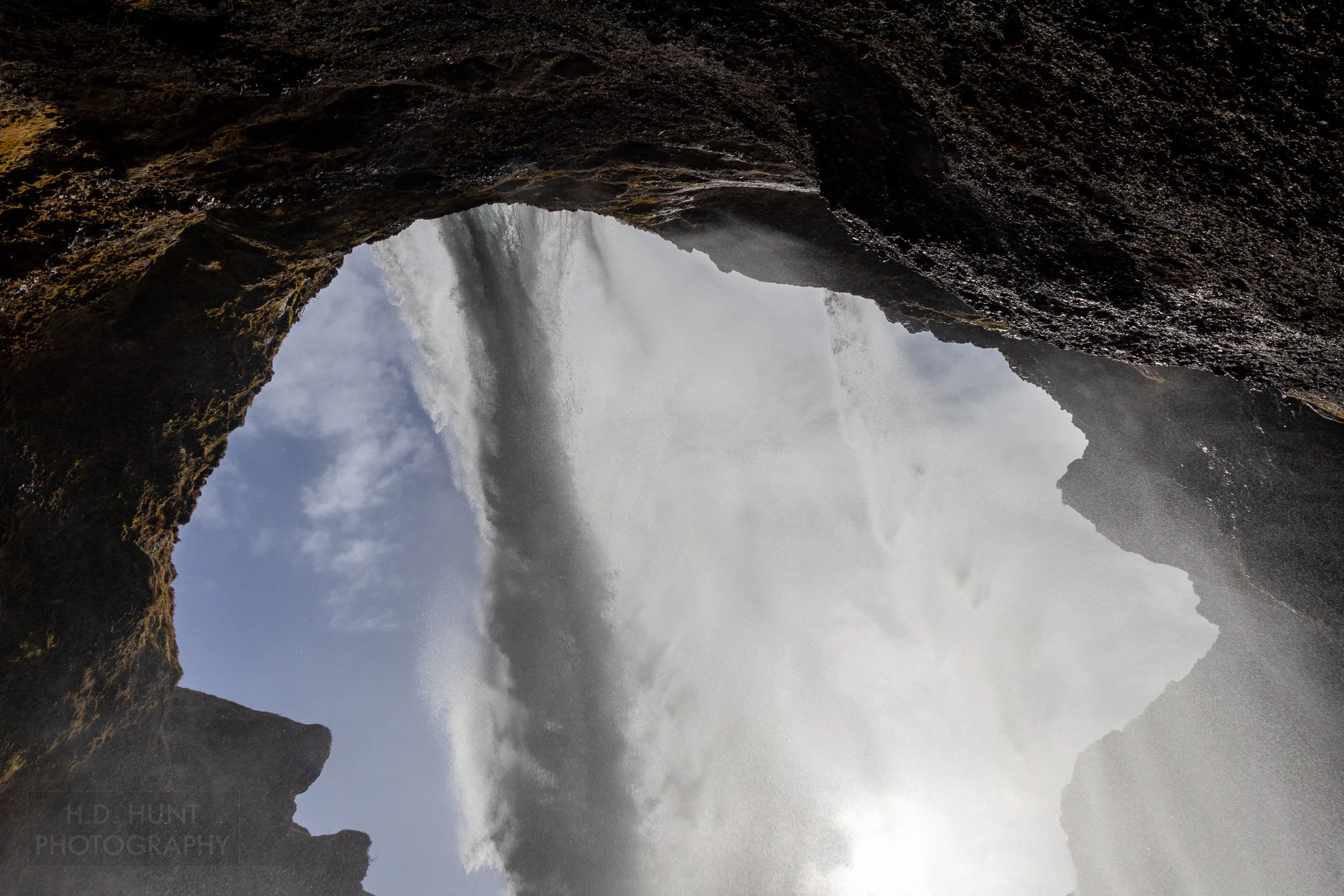
Due to its location near the coast and a deep rock shelter, Kvernufoss consistently produces a significant spray and -if sunny- a single or double rainbow.
First up was Kvernufoss, a really pretty waterfall you can very easily walk behind. This one is easily skipped in favor of its more well-known neighbors, but don’t pass it by!
Five more photographs of Kvernufoss follow.
Want to support this ad-free web page?
Considering giving us a follow on Instagram - it's free!
Thanks for your support!
12. Kvernufoss #2
13. Kvernufoss #3
14. Kvernufoss #4
15. Kvernufoss #5
16. Kvernufoss #1
17. Skógafoss #1
As with Kvernufoss, Skógafoss’ location so near to the ocean is no coincidence: during the last ice age, a massive glacier pressed the whole of the island downwards and Skógafoss was along the island’s coast; following post-glacial rebound, Iceland’s landmass rose, resulting in several waterfalls along the once-shoreline.
Not terribly far down the Ring road is Skógafoss, second only to Gullfoss in terms of overall notoriety
18. Skógafoss #2
In total, Iceland is home to over 10,000 waterfalls, with Skógafoss being amongst both the widest and tallest.
Skógafoss is well-known for having a rather precarious, long staircase alongside of it for accessing its top; we declined to make the ascent.
19. Drangurinn Rock
Drangurinn Rock is a large boulder underneath of which is a series of caves; to take advantage of this natural space, several barns were were placed to access their entrances.
Heading further west, we passed these barns which appear to have been consumed by the nearby rock. Very neat and worth a stop!
20. Seljalandsfoss #1
The main cataract of Selhalandsfoss drops 60 meters / 200 feet.
Our last major stop of the day was the tandem waterfalls Seljalandsfoss and Gljúfrabúi. Most people visiting here neglect the latter, but I encourage you to take the extra ten minutes or so to stop by - its cave setting is quite dramatic, although you’re going to want to bring waterproof shoes and jacket, for sure!
21. Seljalandsfoss #2
22. Gljúfrabúi
Gljúfrabúi means “Canyon Dweller” and is -as you’d expect- found at the end of a small, narrow canyon.
Following this, we had a lovely dinner at Fröken in Selfoss, getting in our last Icelandic culinary delicacies of the trip (due to a mix-up with the local butcher, I was offered horse … and I did not decline!)
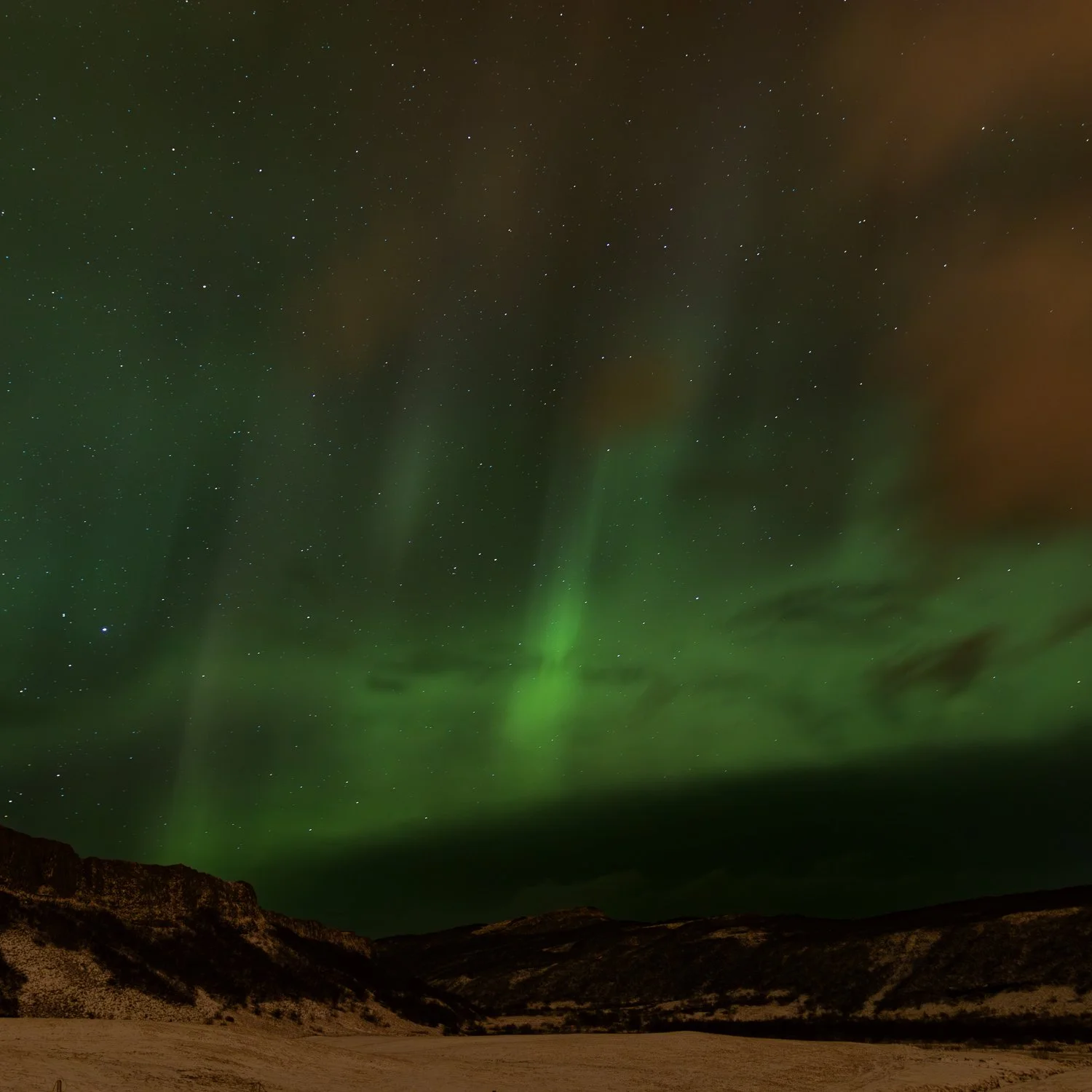
We made our way back to the homestay shortly thereafter, and -noting the weather was generally pretty clear- I checked the cloud forecasts for the area….