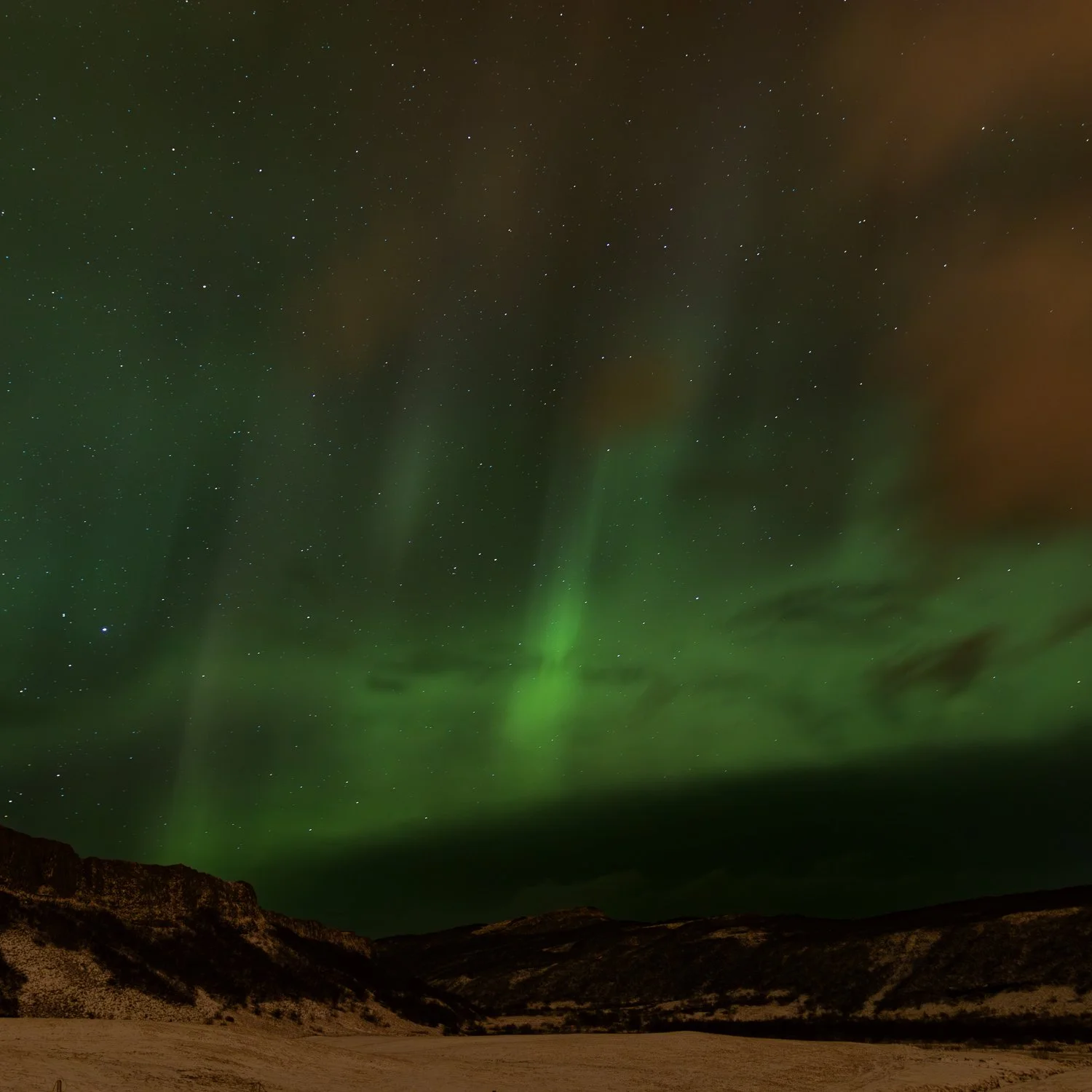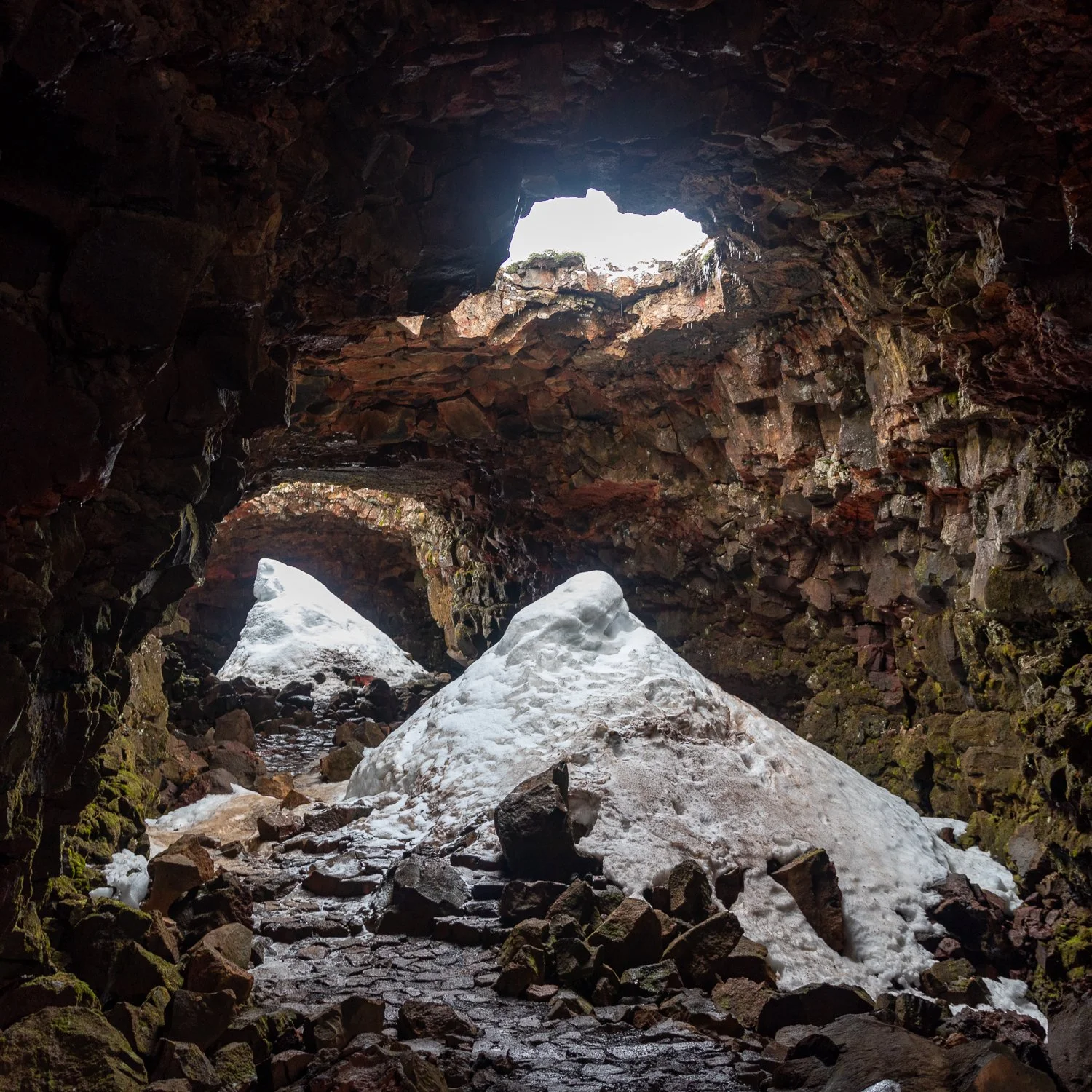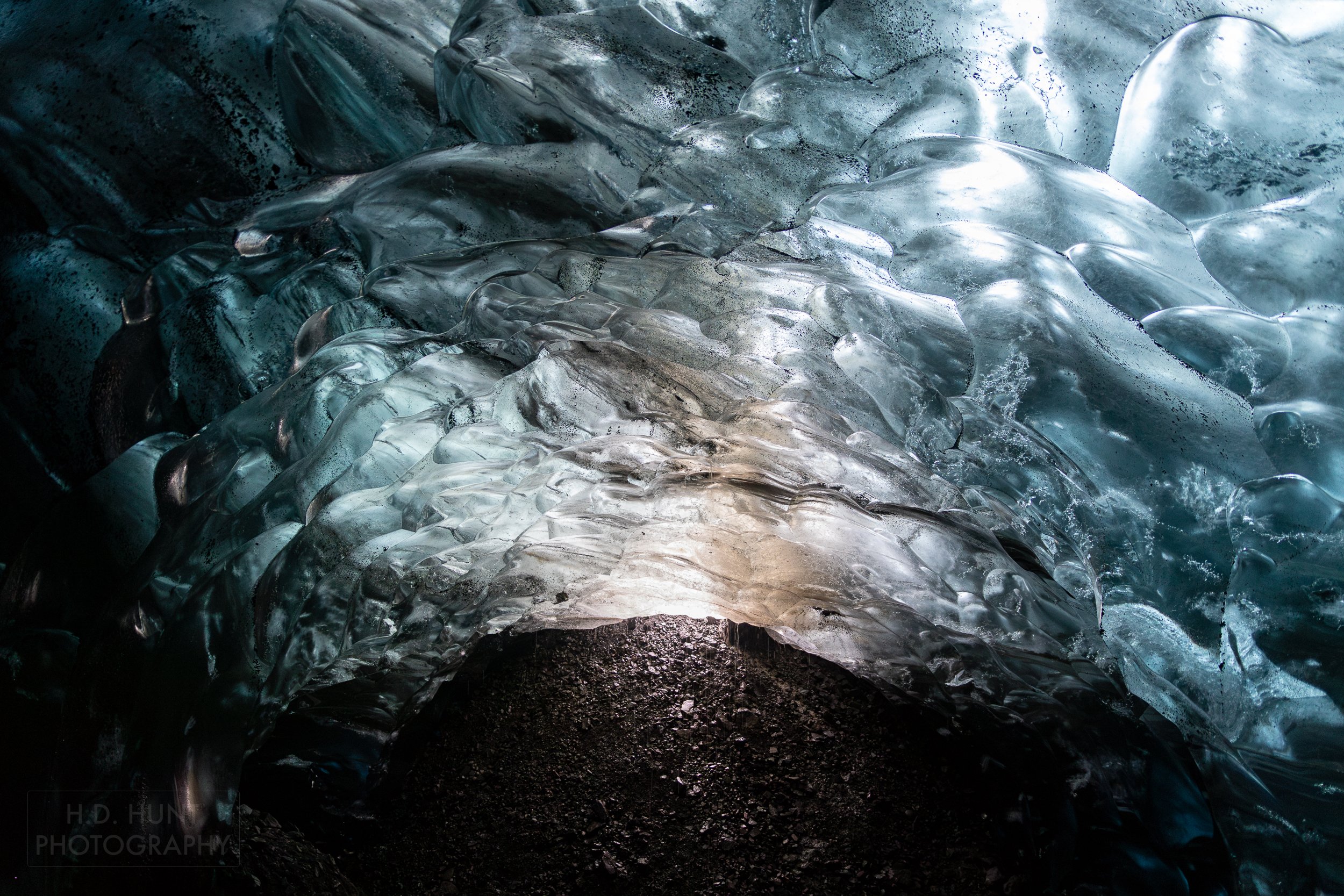
Vatnajökull
Days One, Two, & Three - Iceland - 2025
Three days of winter driving across the southern coast of Iceland with the ultimate goal of visiting the ice caves of Vatnajökull … with some extra stops along the way, of course!
1. Vík #1
Vík í Mýrdal is the wettest town in Iceland, with an annual rainfall of about 2,250 millimeters / 89 inches.
Ah, Iceland in winter, you beautiful temptress! I cannot resist your siren song….
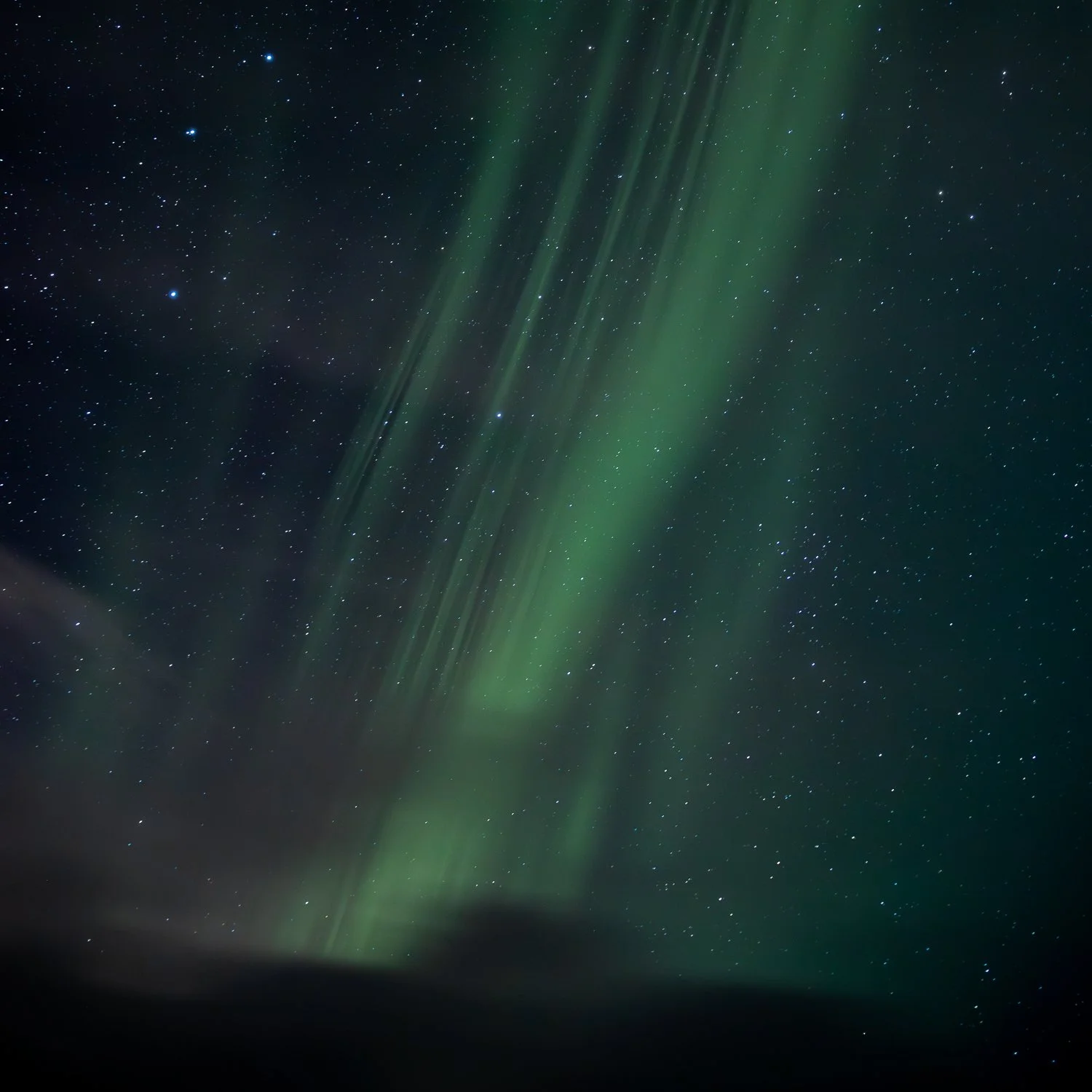
For years (years!) I planned a return to Iceland to see the Northern Lights. I spent hundreds of hours obsessing over cloud data, solar cycle prediction charts, and various other logistical bibs-and-bobs before I felt I finally had the perfect itinerary.
See, all this access to information was a significant departure from my last Iceland winter trip nearly two decades earlier (I was there, Gandalf…) - those were more quaint times where you’d just get into your rental car, look up at the sky, and hope for the best! For what it’s worth, my camera is quite a bit better than the digital potato I had back then. I had no excuses to not get this right.
The plan was pretty straightforward: head out to Vatnajökull to see their famous ice caves before heading to the country’s interior near the Golden Circle for many nights of aurora chasing. Obviously, I’d be doing tons of sightseeing along the way.
Another significant factor this go-around was I would be traveling with a large group of companions. I totally enjoy when people travel with me, but all the same having five other people whose holiday experience will be made-or-broken by your ability to plan is certainly stressful. I do love me a good challenge….
At the risk of tooting my own horn: despite planning this trip about two years in advance (if for no other reason than to secure my preferred homestay), my guess concerning the peak of the aurora borealis cycle missed by only four months. Also, the Sundhnúkur volcano had become active in this time, and there was a slim but real possibility we’d see be able to see it pop off. The cherry on top: there was a strong wave of Northern Lights activity predicted during our stay. I felt pretty damn good about things!
But -with any trip to Iceland- there is one thing you cannot plan for: the weather. Would it be naughty or nice? We were about to find out.
On Day One, four of my five travel companions and I would meet up at Keflavík Airport before heading out towards our hotel near Fagurhólsmýri in the country’s southeast, about a five hour drive away. I sighed in relief when I there was relatively little snow on the ground - while Icelandic rental cars come with studded tires in winter, driving can still be a dangerous proposition, especially as it can go from crystal clear to white-out in a matter of minutes.
Setting out, we made a quick coffee stop in Selfoss before proceeding to the village of Vík. The drive had been mercifully uneventful, although there was a persistent layer of thick, grey clouds looming over us with the occasional, brief snowstorm. But, in one of those circumstances you only seem to find in Iceland, as we descended the small pass into the village, the skies departed and we were greeted with a beautiful rainbow. A good omen of things to come?
2. Vík #2
Opened in 1943, the Vík í Myrdal Church is designated natural disaster rally point within the city due its location atop a tall hill.
I called a very quick audible, knowing that the rainbow would likely be visible behind the Vík í Myrdal Church. Slamming into the church’s small parking lot, we hustled over to catch the tail-end of the spectacle (although I’ll admit my photograph is a bit … underwhelming!)
3. Vík #3
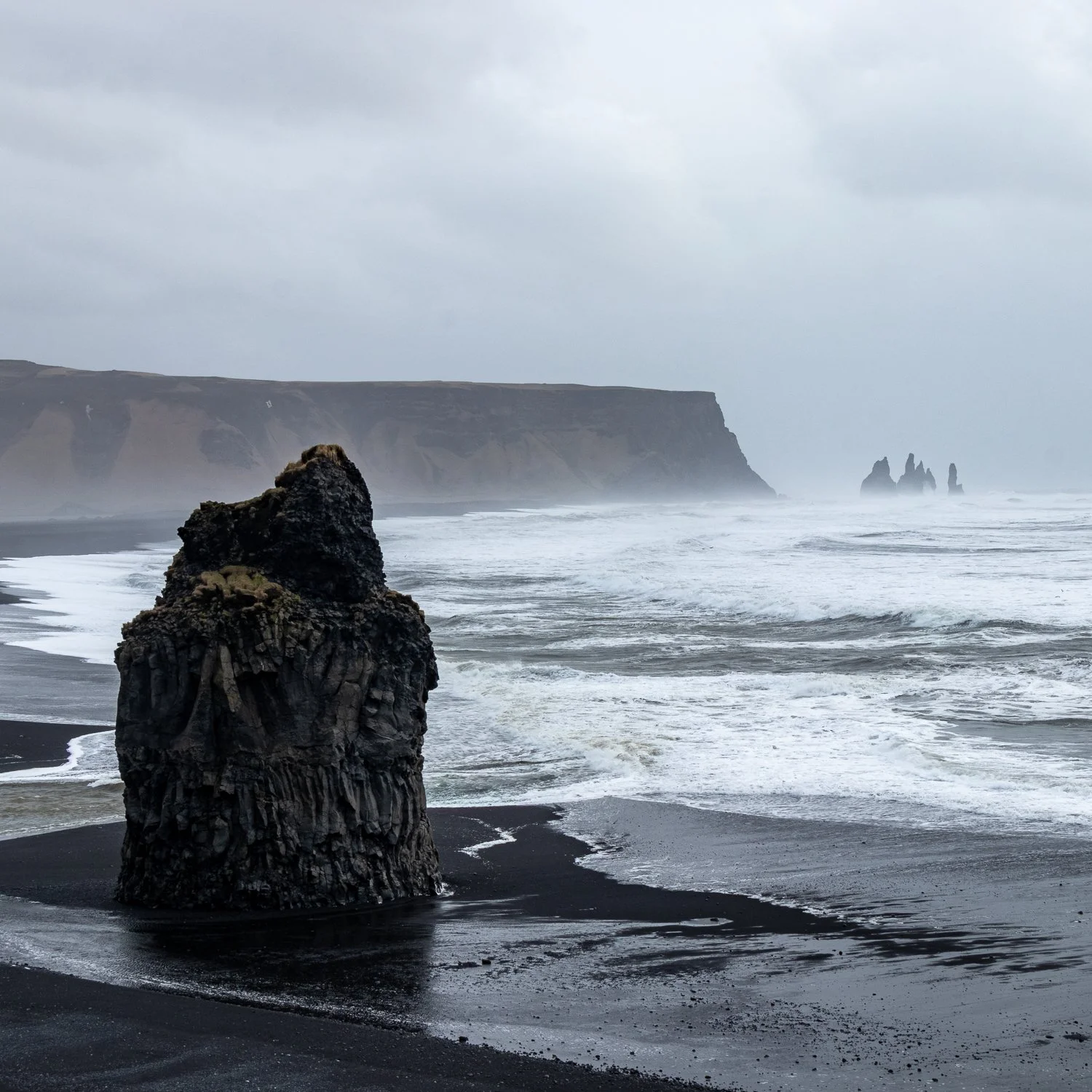
Seeing as how we were already there and the weather was good, we climbed up the small hill above the church to secure one of Iceland’s most iconic photographs. You can even see the massive, thick clouds on the other side of the cliff to the west of the town.
4. Laufskálavarða
In addition to having the world’s most-unncessarily-nice-but-much-appreciated toilet block, Laufskálavarða is home to hundreds of rock cairns, stacked by past travelers for good luck.
After a stop at a nearby grocery store, we pressed forward. Along the way, we’d make a couple of quick stops; however, we were all pretty keen to get to our hotel since we’d all had very little sleep the night before.
Three more photographs from our journey to the hotel follow.
5. Skeiðará Bridge #1
In 1996, the volcano Vatnajökull erupted, melting portions of the Skeiðarárjökull glacier, creating massive flooding; the meltwater carried gigantic blocks of ice which destroyed the once-existing steel bridge on Iceland’s Ring Road.
6. Skeiðará Bridge #2
The far-away Skeiðarárjökull glacier.
7. Hofskirkja
Constructed between 1883 and 1885, Hofskirkja is one of only six remaining turf churches in Iceland.
Reflecting on our trip across the country, I couldn’t help but marvel as to how forgiving the weather was - there were large patches of crystal clear skies and hardly any snow on the ground. It was even above freezing, unheard of for February!
After checking into our top-notch hotel, and after my travel companion’s first true taste of Icelandic food (and Icelandic food prices!) at the hotel’s restaurant, we called it an evening. We’d have an early morning exploring the nearby ice caves.
8. Diamond Beach #1
Where the glacial waters of the Jökulsárlón lake meet the Atlantic Ocean, large chunks of ice from the outlet glacier Breiðamerkurjökull are washed up upon the beach; the crystal-clear blocks of ice are said to resemble large diamonds.
Before meeting up with our ice cave tour leader, we decided we’d visit the nearby Diamond Beach around sunrise. Overall, the temperature was unseasonably warm, but -my word!- the wind was fierce. It was also incredibly overcast. Under more favorable circumstances, we probably would have spent more time here admiring the beautiful glass-clear blocks of glacial ice, but the wind was truly unbearable.
Four more photographs from Diamond Beach follow.
9. Diamond Beach #2
10. Diamond Beach #3
11. Diamond Beach #4
12. Diamond Beach #5
We don't run ads - your follow on Instagram
lets us know how we're doing!
Thanks for your support!
13. Vatnajökull
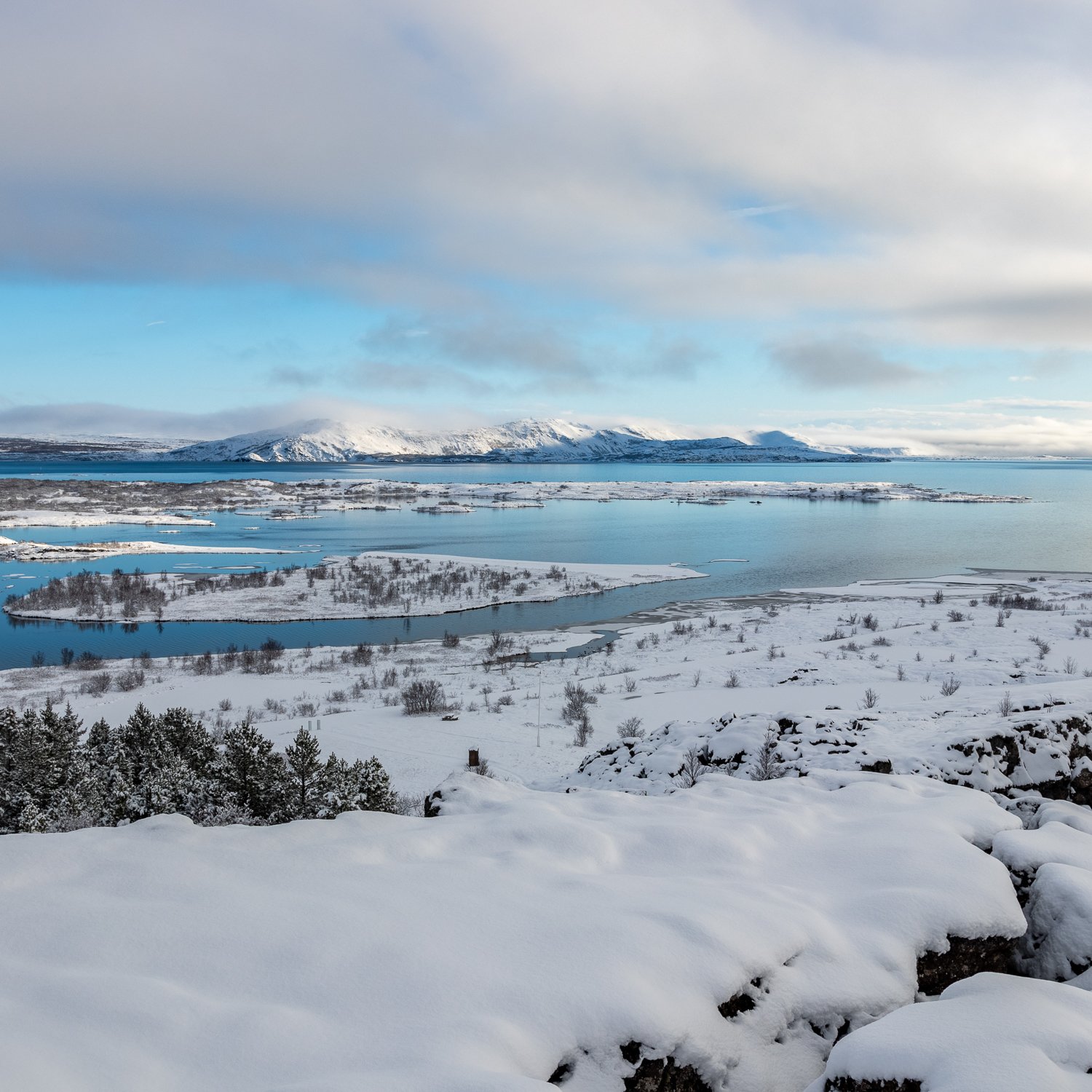
Vatnajökull is the largest ice cap in Iceland and covers 8% of the country’s landmass.
Well, this is where things went a bit sideways. We checked in at the trailer for our pre-scheduled six-hour ice cave walking tour and loaded up into our “off-road super truck” (really, an overcrowded shitheap of a 1980s Ford van, if I’m honest) and made our way up to the edge of the Vatnajökull glacier. Unfortunately, the higher we ascended, the worse and worse the rain got and the worse and worse the wind got. When we arrived at the “trailhead” for our adventure, there was easily a 50-kilometer-per-hour / 30-mile-per-hour sustained wind and absolutely pelting rain. Like, the kind of rain that actually hurts your face.
Our guide mulled over the situation and decided it was not safe for us to do our walk: the conditions were too difficult to see in and the quick-falling rain could create dangerous floods or ice and rock falls inside the caves themselves.
As a consolation, of sorts, we’d still be able to visit one nearby ice cave, certainly the largest and most stable of the ice caves on the glacier (or, at least I hope it was!) This would significantly cut our day short and we’d not be able to see some of the more complex caves on the glacier, but it was better than nothing.
I didn’t feel too bad about this (again, what can you do about the weather?) but certainly felt bad for my travel companions who shelled out time and money to join me on this side quest.
Eleven photographs of our visit to the cave follow.
14. Vatnajökull Ice Cave #1
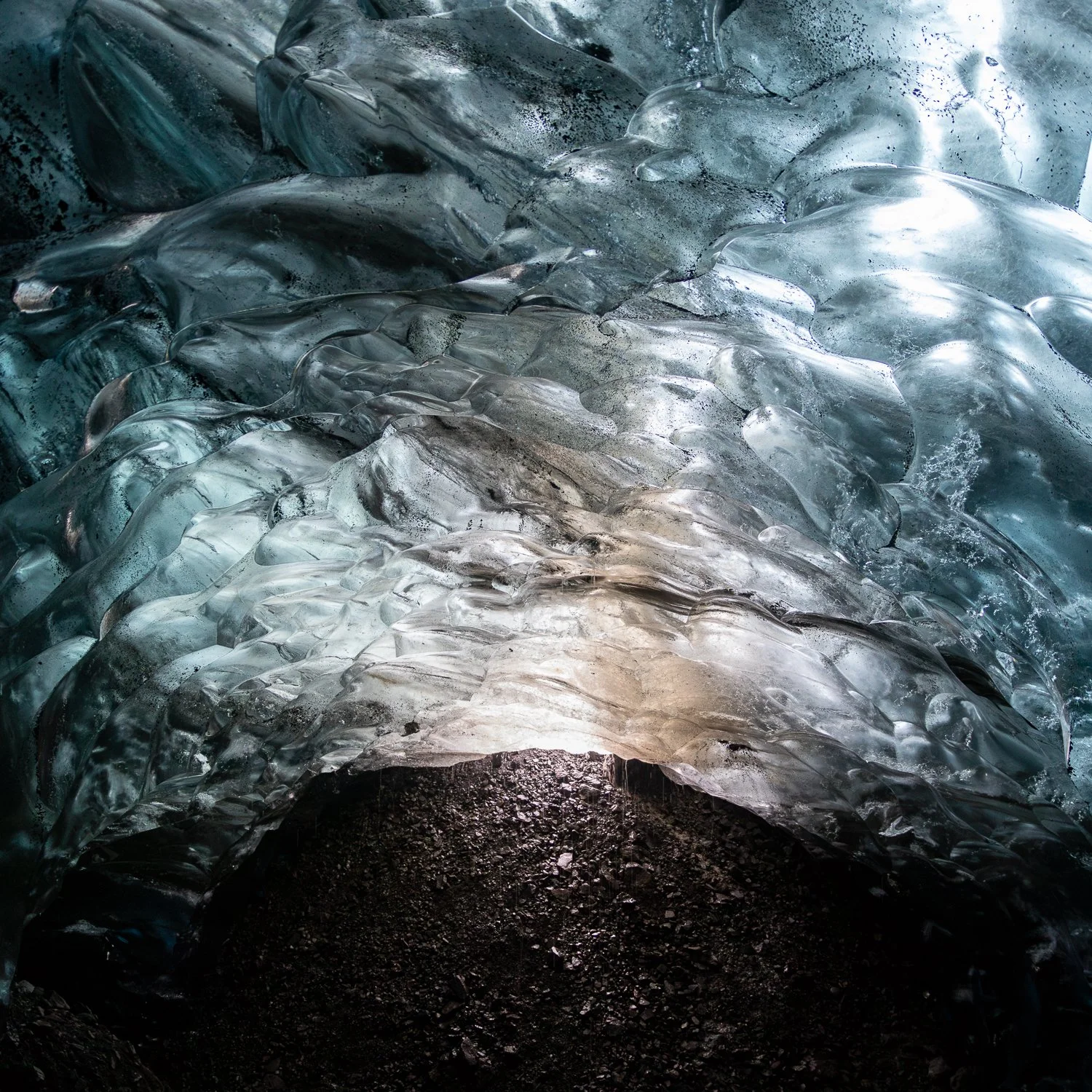
Iceland’s ice caves are formed when glacial meltwater seeps into the glacier ceiling, forming navigable tunnels.
15. Vatnajökull Ice Cave #2
16. Vatnajökull Ice Cave #3
17. Vatnajökull Ice Cave #4
18. Vatnajökull Ice Cave #5
19. Vatnajökull Ice Cave #6
20. Vatnajökull Ice Cave #7
21. Vatnajökull Ice Cave #8
22. Vatnajökull Ice Cave #9
Here is the end of the cave - the photograph does not adequately provide scale, but it was certainly large enough to stand up in and six or seven people could easily stand abreast. What was worrying for me was the water absolutely pouring into the opening, bringing with it the occasional steam of rocks which were starting to pile upwards towards the ceiling. Being underneath several tons of ice and seeing this is not a comforting experience, trust me!
23. Vatnajökull Ice Cave #10
24. Vatnajökull Ice Cave #11
After visiting the cave, we returned back to the registration shack to out-process (and receive a partial refund for having not done the longer tour.) The savior of the day was the adjacent Heimahumar "Local Langoustine" Truck, who were still cranking out delicious lobster rolls and soup despite the absolutely atrocious weather - shout out to them!
Cold, wet, and pretty dejected about the situation, we headed back to the hotel. Honestly, not like there was much else we could do at that point. My co-travelers enjoyed the hot tub on-site, so there was that! After another delicious dinner at the hotel, we called it early as we faced another long journey back to Keflavík Airport the following day.
25. Vatnajökull National Park #1
Svartifoss lies within Vatnajökull National Park, one of three Icelandic national parks and the largest.
Filed away in the “You Can’t Win Them All” folder, the next morning was gloriously clear. While this twisted the ice cave dagger just a little bit, it did mean we’d have a really lovely day for some additional outdoor activities. First on the list was a short hike to Svartifoss, the first but by absolutely no means the last waterfall we’d set out to see on our trip. Normally in winter the hiking path can be treacherously icy, but it was very easy going! I had told my travel companions to bring microspikes along just in case, but we certainly didn’t need them (not a complaint!)
26. Hundafoss
Hundafoss -Dog Falls- gets its name from unfortunate incidents when river swelling carried local dogs to their demise.
See, I lied! Svartifoss wasn’t even the first waterfall we saw as we passed the smaller Hundafoss along the way.
27. Svartifoss #1
Svartifoss -Black Waterfall- gets its name from the dark columnar basalt surrounding it.
Arriving right after sunrise meant we had the whole waterfall to ourselves, which was lovely! Svartifoss is a particularly picturesque waterfall with its deep, dark columnar basalt wall and we stayed around for a while to admire it.
28. Svartifoss #2
29. Svartifoss #3
I found a nearby rock which I could repurpose as a stand to take a long exposure … honestly surprised it worked as well as it did!
30. Svartifoss #4
31. Vatnajökull National Park #2
Following our short hike, we continued on westward.
32. Fossálar Waterfall #1
Fossálar sits in the lava field created by the 1783-1784 Laki super-eruption, which killed 20% of Iceland’s residents, 50% of its livestock, and most of its crops.
We passed this roadside waterfall and made a quick stop to check it out. One of my favorite things about traveling in Iceland is you can literally find beautiful photography locations everywhere - the whole country is staggeringly beautiful.
33. Fossálar Waterfall #2
34. Fjaðrárgljúfur #1
Fjaðrárgljúfur is a river-formed canyon 2 kilometer / 1.2 miles long and 100 meters / 300 feet deep.
We stopped for another quick hike, this time at the canyon Fjaðrárgljúfur. In a completely ironic set of circumstances, the sun was too bright and was beaming down the long axis of the canyon. This made getting pictures a bit tricky, but I did the best I could.
35. Fjaðrárgljúfur #2
The Mögárfoss waterfall is 35 meters / 115 feet tall.
36. Fjaðrárgljúfur #3
37. Fjaðrárgljúfur #4
38. Fjaðrárgljúfur #5
Following this, we made our way back to Vík for lunch and a show!
39. The Lava Show #1
Opened in 2018 in Vík í Mýrdal, the Lava Show is “the world’s only live lava experience” and reaches 1,100 degrees Celsius / 2,000 degrees Fahrenheit.
I normally avoid these tourist-oriented shows when I travel, but the reviews for “The Lava Show” were so overwhelmingly positive, I just had to see what it was about (thankfully, my travel mates were willing to come along!) And, honestly, it’s pretty neat - you basically get an animated history of the area’s relationship with the Katla volcano followed by … well, lava coming into the room via a sluice. It is certainly quite warm (welcome on a cold day) and -short of seeing the real thing- pretty fascinating to see up-close.
40. The Lava Show #2
The show’s location in Vík í Mýrdal is not accidental: the town lies in the path of the Katla volcano, which itself sits beneath the Mýrdalsjökull glacier; if it were to erupt and melt the glacier, the entire city would likely be destroyed.
41. The Lava Show #3
Katla last erupted in 1918 and is considered to be “due” for an eruption.
42. The Lava Show #4
43. The Lava Show #5
Following our quick stop at The Lava Show, we concluded our return journey to Keflavík, staying at a hotel that was unmistakably a former U.S. military barracks (if you know, you know!) After opting for dinner at the hotel (a surprisingly good choice), we settled into our family room accommodation for some relaxing.