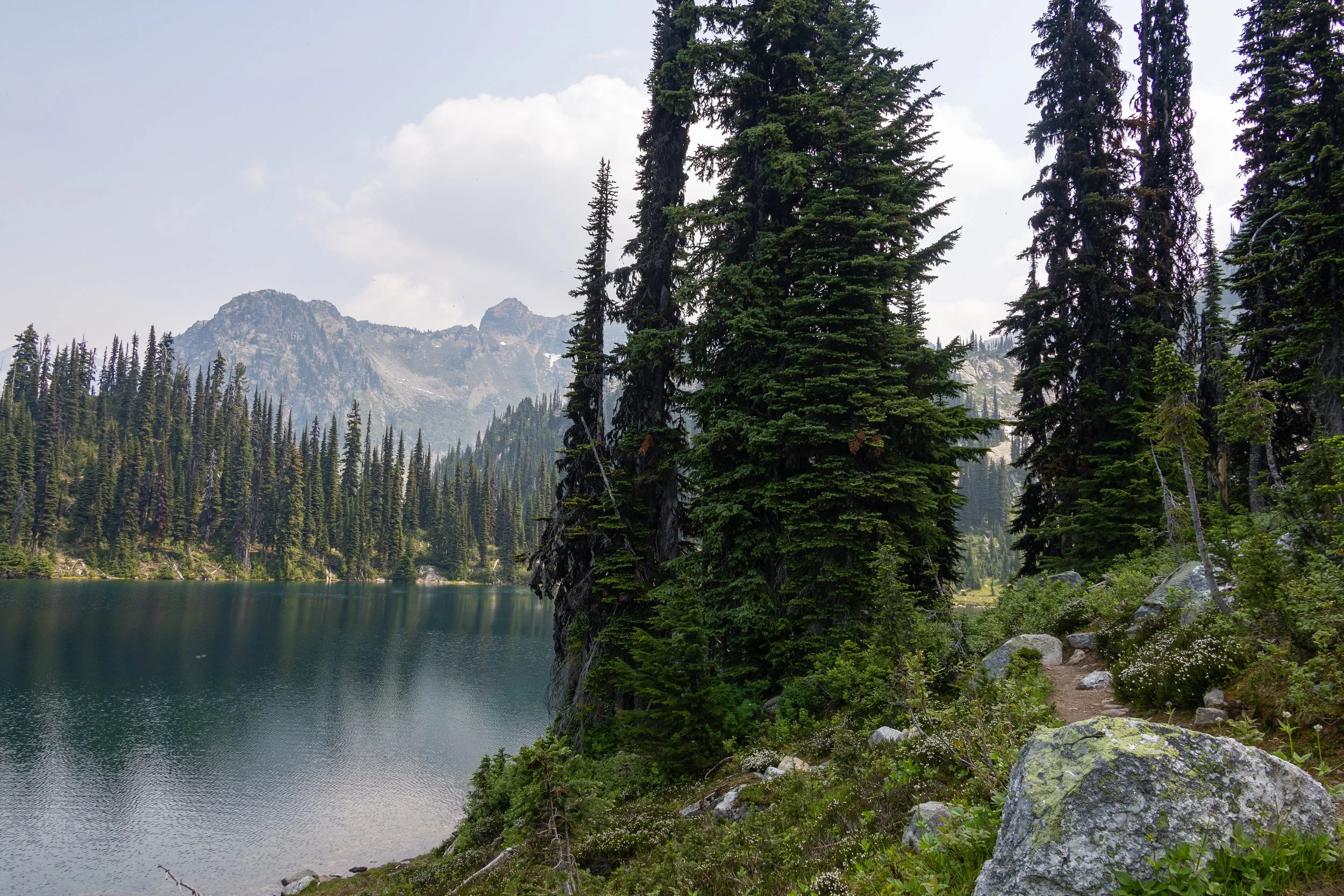
About the Hiking in the Canadian Rockies Tour by Much Better Adventures
Have you booked or are you thinking of booking the Hiking in the Canadian Rockies tour by Much Better Adventures? Here’s a review to help you make your decision and provide you some additional insights into what to expect.
All information valid as of July 2026, unless otherwise indicated, and -no- I was not furnished to write this review.
(Updated August 2026.)
(Prior to reading, please consider reviewing the “My Ethics” page.)
Bottom-Line Up Front
The Hiking in the Canadian Rockies tour by Much Better Adventures is a well-paced, not-too-physically demanding way to take day treks to the region’s top vistas and lakes. While one could certainly self-plan a similar trip, the value added in traveling with Much Better Adventures is simplified logistics -including food, transportation, equipment, and meals- and safety-in-numbers in bear country. As Much Better Adventures now offers this tour in a nearly-identical hotel accommodated version, the primary decision you need to make is whether peace and quiet are worth the increase in price.
Tour Booking Information
Why I Booked the Hiking in the Canadian Rockies Tour
Hiking in the Canadian Rockies had long been a goal of mine. While I no doubt could have self-planned a trip to the region, there were multiple factors which drew me to a group tour. First was safety: let’s be honest, hiking solo in grizzly bear country is not a terribly smart idea if you can avoid it. Second was a more practical consideration: bringing both hiking and camping equipment from the East Coast of the United States is a chore, sorting out transportation and lodging is a chore, having to sort out meals (particularly, cooking equipment) is a chore, sourcing bear spray is a chore, and organizing permits is a chore, so any opportunity to minimize this logistically was a huge plus.
At the time I booked, there were three primary itineraries to choose from in this area among major tour operators catering to solo travelers:
Hiking in the Canadian Rockies by Intrepid Travel,
Active Canadian Rockies Adventure by G Adventures, and,
Hiking in the Canadian Rockies by Much Better Adventures.
Genuinely wanting a very active tour which crammed as many hikes into the day as possible, the choice of Much Better Adventures was an easy one. I also thought that this tour hit more of the region’s best-known top highlights compared to the others.
It is worth noting that when I booked the accommodated alternative, Hiking in the Canadian Rockies: The Hotels Edition, was not yet offered.
One upside of this tour is it gave me an opportunity to see Much Better Adventure’s product, as this was the first time I had traveled with this U.K.-based company.
About Much Better Adventures
They are relatively transparent about this fact on their website, but -to emphasize- Much Better Adventures is a tour organizer, not a tour operator. In other words, they make arrangements with local tour operators and handle the booking logistics. I wouldn’t call them strictly a tour reseller (since you are not co-mingled with travelers who booked through other companies), but -as far as I can tell- the folks actually running their trips are not company employees. Going back to the earliest incarnation of their website I could find, they even say:
muchbetteradventures.com is not a bookings agent;
please use our site to find the services that suit you best and you will then place your booking with the company directly.
Much Better Adventures has experienced tremendous growth since their first tours in the 2009-2010 season, and have recently edged into the North American market. Just my impression, but much of this expansion is fueled by an aggressive social media and advertising campaign and -I’ll say- they are quite good at it. This has consequences I’ll talk about later, but -for now- it is my conclusion that Much Better Adventures can be categorized as a travel marketing company more than anything else.
So, who actually ran my tour? This was the Quebec-based Windigo. Does Windigo run every iteration of the Much Better Adventures Hiking in the Canadian Rockies tour? No idea. But -for all intents and purposes- this review is more a review of Windigo than anything else, I do want to be clear about that.
And if you’re thinking it, no, you cannot book this itinerary directly with Windigo since they specialize in customized itineraries….
Booking with Much Better Adventures
Booking was incredibly straightforward and there were no major issues. The pre-departure portal was incredibly useful and functional. Much Better Adventures initiated a WhatsApp chat group about a week prior to departure so individuals could ask last-minute questions, which was useful.
If you visit the tour webpage, you’ll note the operating window for this tour is incredibly short (only four summer months) with a handful of departures each month; furthermore, each tour is limited to twelve participants. This does mean some advance planning and booking is required for this trip to avoid being blocked by a sell-out.
Transparency of Pre-Booking Information
I’ll hand it to Much Better Adventures: the amount of pre-departure information they have on their website is exceptional, from the actual names of the campsites stayed at to specific information about each hike’s elevation gain and distance. I do also appreciate they post customers’ photographs directly on the page so you can see a less biased or idealized representation of what you are going to experience.
Also: credit where credit is due, their packing list was pretty comprehensive.
My only complaint (albeit a minor one) with the website is the tour map feature is … incredibly underwhelming!
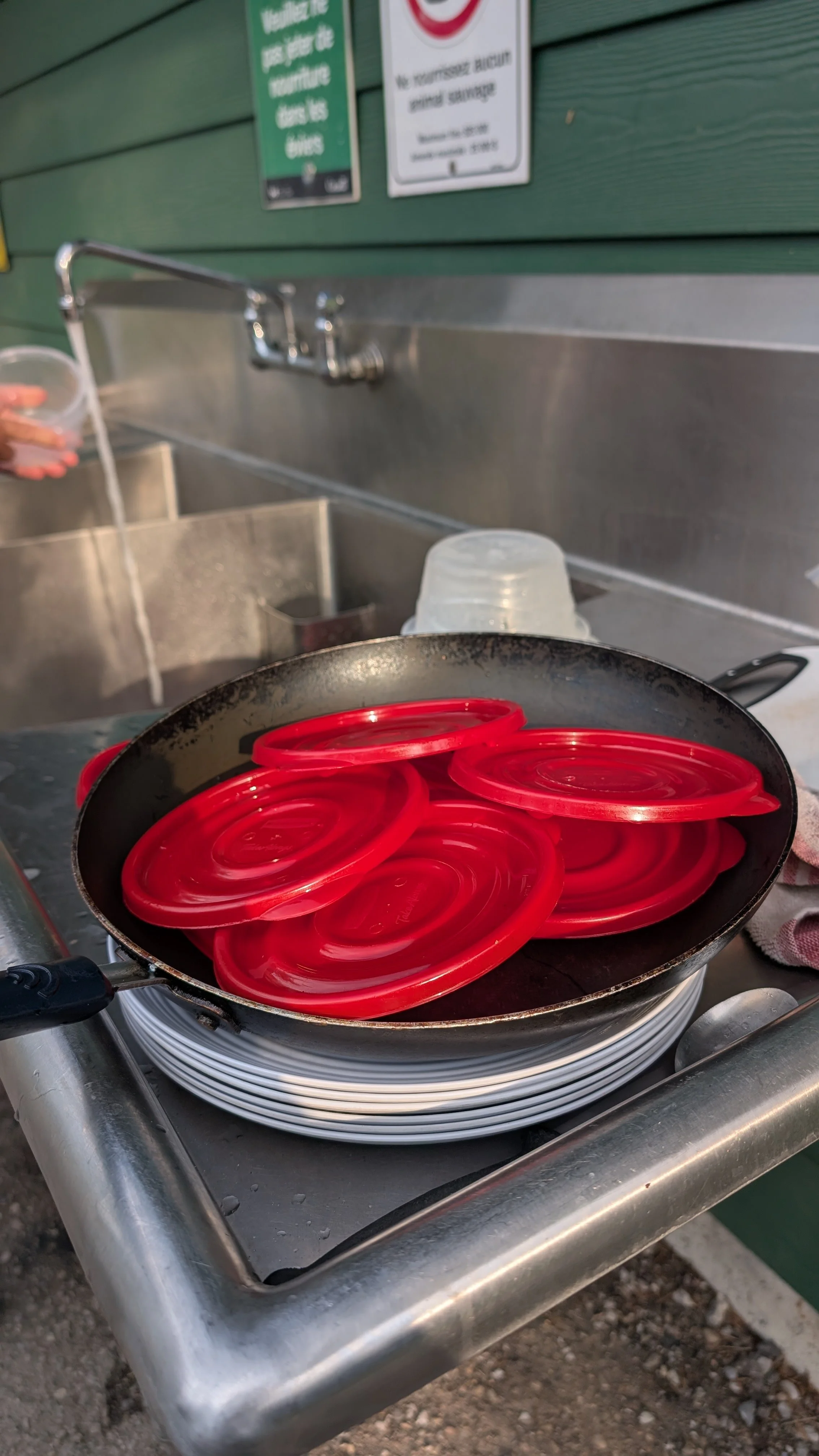
Now: even though it is on the tour page, there is one thing I will make very clear - this is a participation camping trip, meaning you will occasionally have to wash and dry cooking dishes following a meal. It is a pretty easy job, but don’t say they didn’t mention it….
Primary Differences Between the Camping & Hotel Versions
As stated, the option to book the accommodated version of this trip was released after I had booked the camping tour. I’ll discuss in detail later whether I recommend one over the other, but -for now- I’ll just cover the basic differences (aside from the obvious ones relating to sleeping arrangements):
The Camping Version is 10 days in total, vice eight days in total for the Hotel Version.
The Camping Version includes hikes to “Mount Fairview” (I’ll explain the quotes later), Katherine Lake, and a rest day at Emerald Lake; the Hotel Version includes a hike to the Cascade Amphitheater (which is about the same time and distance as Mount Fairview) but excludes a rest day (probably not necessary due to the comfortable accommodation.)
The Camping Version includes several extra dinner meals, while the Hotel Version includes only breakfasts and lunches, as well as a farewell dinner.
The Hotel Version costs about 72% more than the Camping Version, before factoring in additional dinner expenses.
The Tour
A Quick Day-by-Day Breakdown (with Itinerary Changes)
Since the Much Better Adventures website is so comprehensive, I won’t rehash it too much. Instead, I will try to give a bit more detail day-to-day, as well as clarify how our trip was modified (albeit not too significantly).
Day One - Touchdown in Calgary: The only additional information of value I can provide is that the Element Hotel Calgary Airport is about a 25-30 minute shuttle van ride from the terminal, the pick-up point is about a 10-15 minute walk from international baggage claim, and the shuttle only departs once an hour. This means it can be as long as 1 hour and 45 minutes between when you claim your baggage and arrive at the hotel. I only bring this up as a warning if you plan to arrive into Calgary later in the evening as I did.
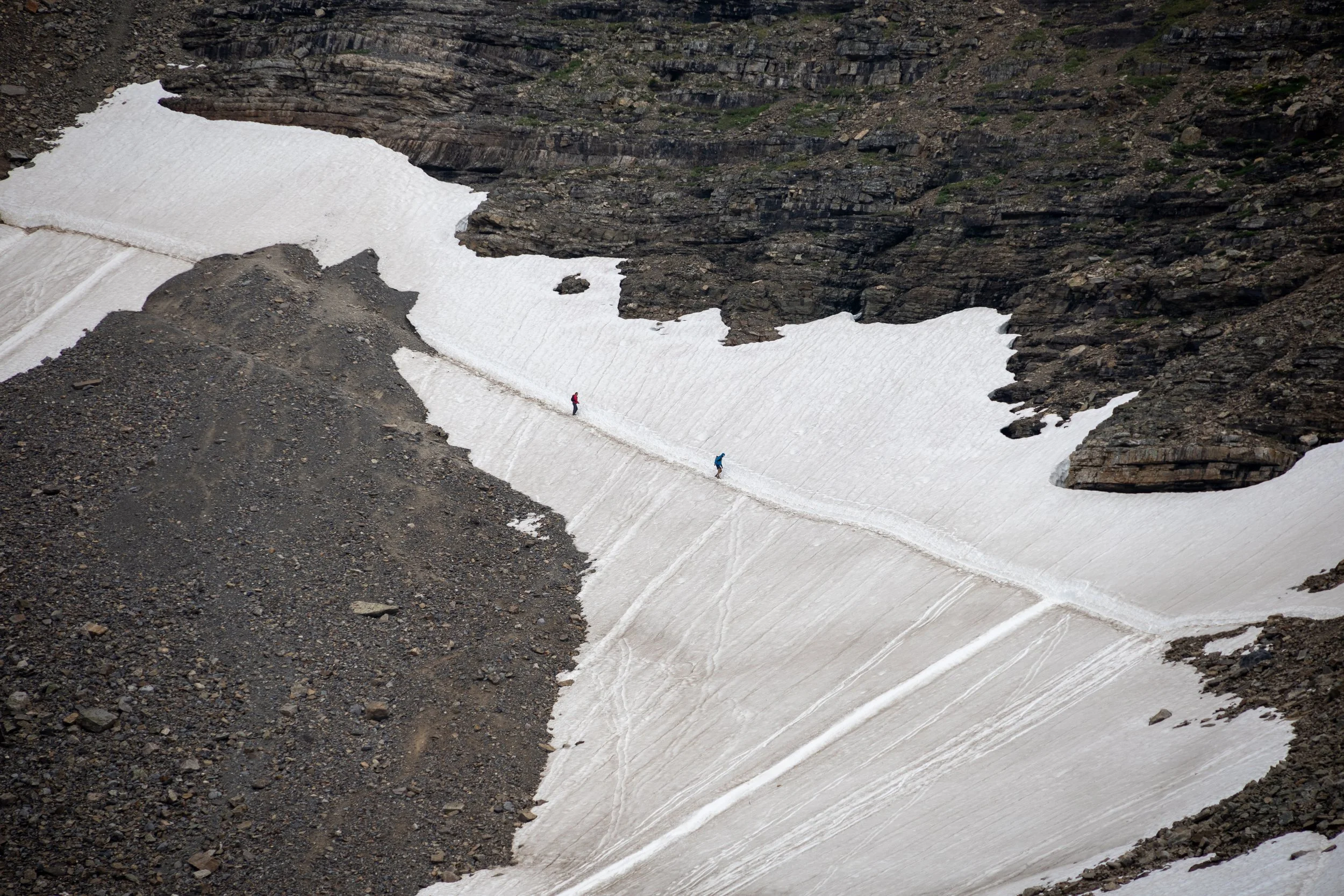
Day Two - Sentinel Pass Trail and Lake Louise: En route to Moraine Lake, we made a quick stop in Canmore where there was a coffee shop, a grocery store, and an outdoor equipment store. Following this, we headed up towards Sentinel Pass (on a route known on AllTrails as the Larch Valley Trail), although we were unable to press to the top of the Pass due to snow (this didn’t stop other hikers from trying, however….)
Following this, we had a fairly significant itinerary change - rather than being accommodated at the Lake Louise Campground, we instead made our way to the Johnston Canyon Campground, about an additional 30 minutes to the southeast.
Day Three - “Mount Fairview” Summit Trail: Again, you’ll notice Mount Fairview in quotes - instead, we did the nearby Plain of the Six Glaciers hike, which is a little longer, but a little flatter than Mount Fairview. Not really too sure why that happened, but -since I thoroughly enjoyed this hike- I won’t complain. The upside of this route is there is a teahouse which serves drinks and snacks on the trekking route, which makes for a nice break. We also made a quick stop at a shopping plaza in Lake Louise on the way back.
Day Four - Katherine Lake Trail: Katherine Lake was one of if not my favorite hike of the trip - be sure to make it all the way down to Katherine Lake, the views are amazing. As advertised, we had a very quick stop at Bow Lake - there is a small coffee shop there. We had dinner at the HI Hostel in Lake Louise.
Day Five - Wilcox Pass Trail and the Icefields Parkway: Following the scheduled stop at Peyto Lake, we were lucky the trail was clear enough for us to do the planned hike to Wilcox Viewpoint. Afterwards, we had a quick stop at the Jasper National Park Icefield Information Centre, which features a coffee shop, restaurant, and gift shop. On the way back to the campground, we made an additional stop at the shopping center in Lake Louise. This was by far the longest driving day of the trip, although our drive time was definitely lengthened by our stay at Johnston Canyon.
Day Six - Emerald Lake and Yoho National Park: After making a quick unscheduled stop at Takakkaw Falls (your results may vary), we had about four hours at nearby Emerald Lake to explore. There is a small coffee shop there, as well as the option to rent a canoe (100 Canadian dollars per canoe, which can be divided between two or three people). Four hours was a lot of time … but I’ll explore this further below. We proceeded to Canyon Hot Springs Resort as scheduled, with a stop at the Giant Cedars Boardwalk Trail en route.
Day Seven - Eva Lake Trail and Revelstoke National Park: Another day which proceeded mostly as planned, we undertook the hike to Eva -and Miller- Lakes before stopping back at the campground to shower and / or do a quick load of laundry prior to heading to downtown Revelstoke for dinner.
Day Eight - Balu Pass Trail and Glacier National Park: This trek didn’t happen due to avalanche damage; instead, we went to Paget Lookout and Sherbrooke Lake Trail back in Yoho National Park. Afterwards, we checked in at the Tunnel Mountain Village Campground.
Day Nine - Cory Pass and Banff: Saving arguably the best hike for last, we completed Cory Pass as advertised before returning to the campsite for a clean-up. We had some extra time in Banff before the farewell dinner, which we had at Banff Social.
Day Ten - Goodbye Rocky Mountains: After tearing down our campsite, we had some extra time in the morning to explore Banff before heading to Calgary Airport. We arrived at the terminal building shortly after noon, so I’d use that as a very aggressive benchmark for scheduling flights out of the country.
Optional Activities
Strictly speaking, there was only one true optional activity on the trip, the canoe rental at Emerald Lake which -as mentioned- is about 100 Canadian dollars split two or three ways.
Campsites & Pre-Departure Hotel
We stayed at three campgrounds on our trip, as well as the pre-departure Element Hotel Calgary Airport. For quick reference, our three campsites were:
Johnston Canyon Campground,
Canyon Hot Springs Resort, and,
Tunnel Mountain Village Campground.
Common Campsite Features & Shortcomings
Realistically, there wasn’t that much difference between the three campsites, so it is easier for me to discuss what they all had in common before diving into some specifics for each.
Let’s get this out of the way first: each and every one was located next to a Canadian Pacific Railway line. Heck, even the Lake Louise Campground we didn’t stay at is located next to one of these railways. These trains run all day and all night and really, really want you to know with their horn when they are coming to a level crossing. I’ll reiterate this below, but -for your own sanity- bring earplugs!
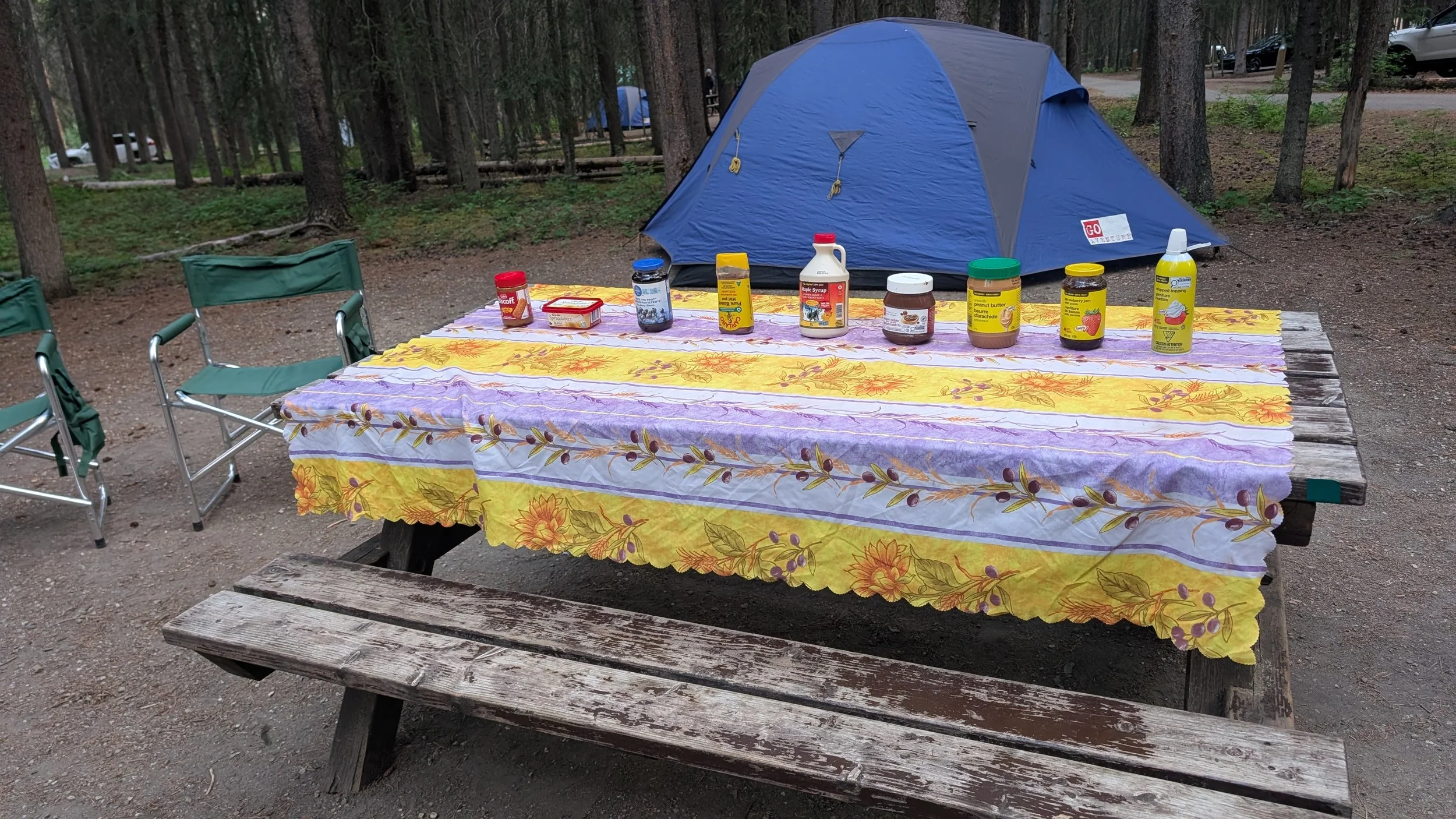
Anyway, as far as the layouts go, our group took up three to five campsite pads at each campsite, with each campsite pad featuring a small fire ring and a picnic table. Each site was sided by trees (great for hanging a clothesline), and each was adjacent to an access road (great for ease of access, bad for late night headlights). The ground material varied from campsite to campsite, and I’ll discuss that a bit more soon.
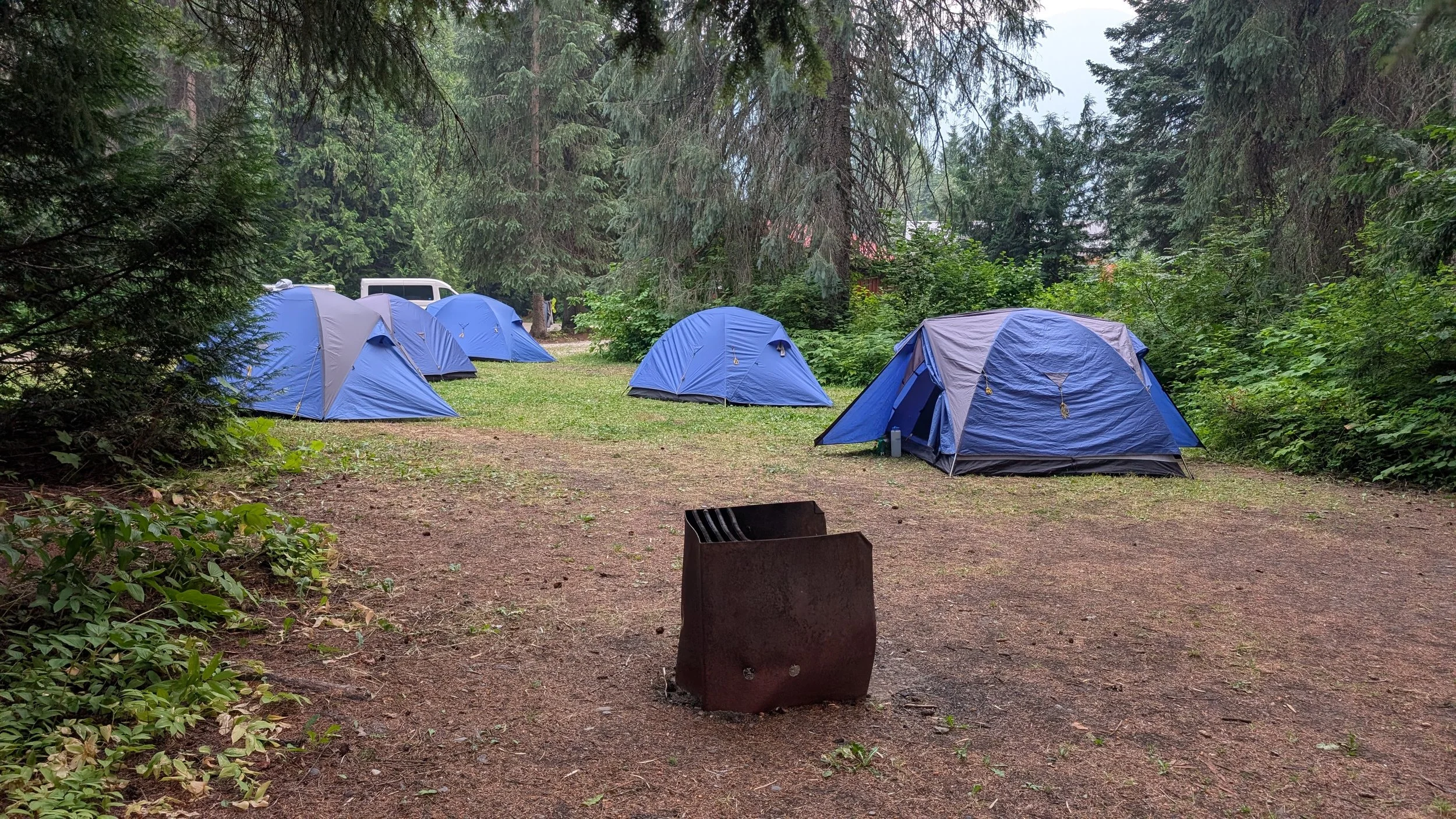
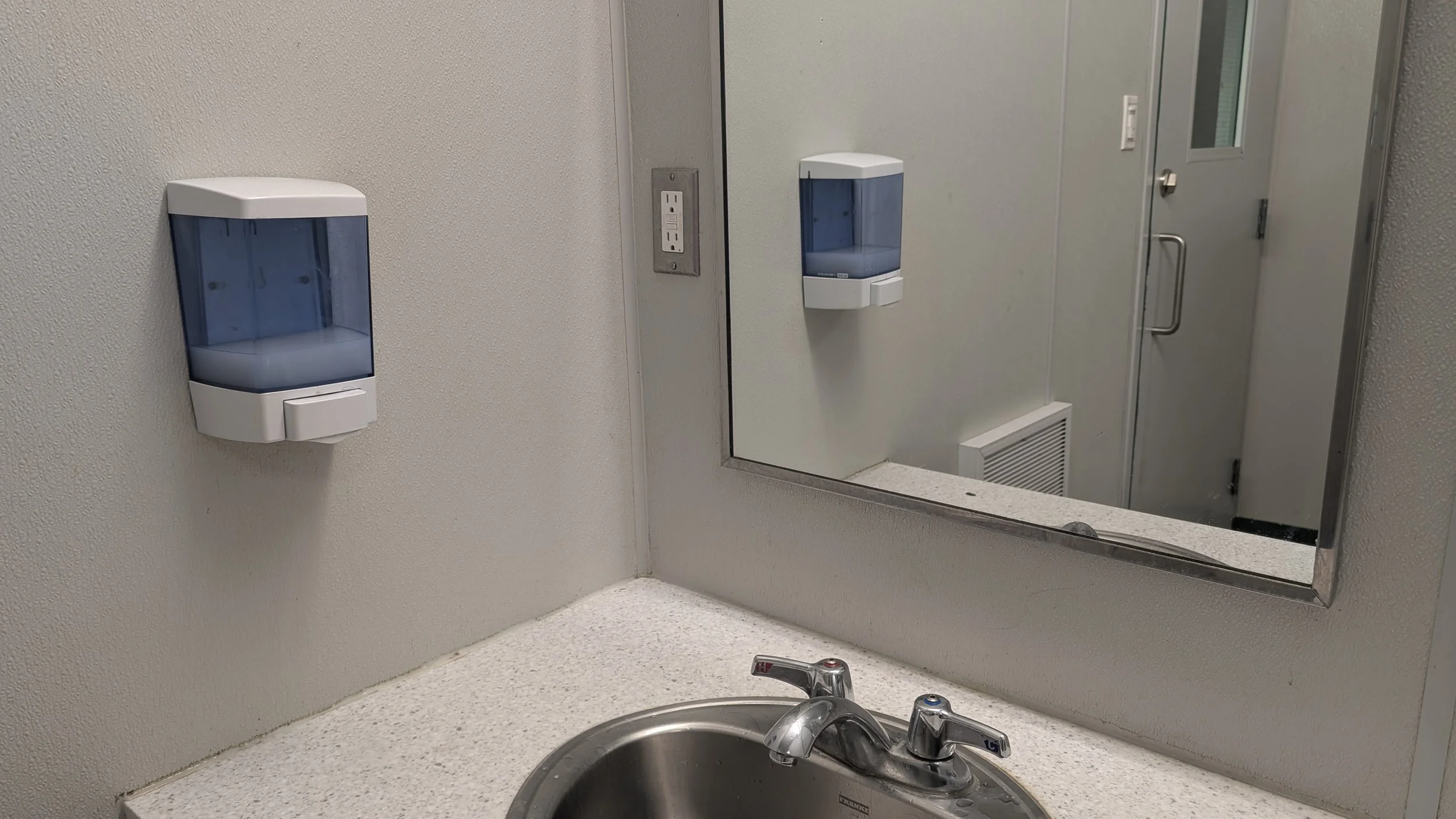
Each featured a toilet block with typically two or three stalls. In some cases, these were co-located with showers, in some cases not - I’ll break that down a bit below. Each toilet block featured a large exterior sink for washing dishes. Each toilet block also had a limited number of 110 volt outlets for recharging electronics.
Each campsite had bear-resistant trash and recycling bins, and each campsite was surrounded by animal fencing.
Typically, the crew would had their own campsite pad, which would also serve double-duty as the kitchen and common gathering area.
Johnston Canyon Campground
Some quick notes about this place: the ground here is incredibly firm and features an incredible amount of sharp tree liter. While, yes, I realize it is a campsite, I would be remiss if I didn’t mention this because the needles will certainly chew up your soft-soled sandals and can poke through the bottom of your tent if you’re not careful.
This campground also doesn’t co-locate its shower and toilet blocks, although the walk was not terribly inconvenient in my opinion.
Canyon Hot Springs Resort
Thankfully, our camping pads featured soft grass so no issue there.
I’d be remiss if I didn’t point out that our toilet block only had one outlet, which got a little … competitive.
Lastly, and most importantly, its key feature is that it is a resort … which has its plusses and minuses. On the plus side, it has a pool, accessible (along with the adjacent hot pool and shower block) for 10 Canadian dollars. There is also the option to do laundry (I believe 8.50 Canadian for the wash cycle).
On the downside, the shower blocks are pay-to-use, coming in at a crisp 4 Canadian dollars for six minutes. To add insult to injury, these machines only take Loonies (one dollar coins). I’ll give it a pass since I think we were at the furtherest point away in the park, but the shower block was a solid 10-15 minute walk away and this campground has no signs pointing you in the right direction.
The resort does have a little shop, although I didn’t go in it to see what offerings it has.
Tunnel Mountain Village Campground
This place is massive, featuring over 1,000 campsites in total. Perhaps one-off, my camping pad had many tree roots running through it I had to navigate.
The nice feature of this campsite is the bus which runs to the city of Banff until 11PM (2 Canadian dollars return) if you want to sneak into town.
I call ‘em as as I see ‘em, and this campsite had some of the nastiest showers I’ve ever seen at a campground … which, I assure you, is saying something….
Element Hotel Calgary Airport
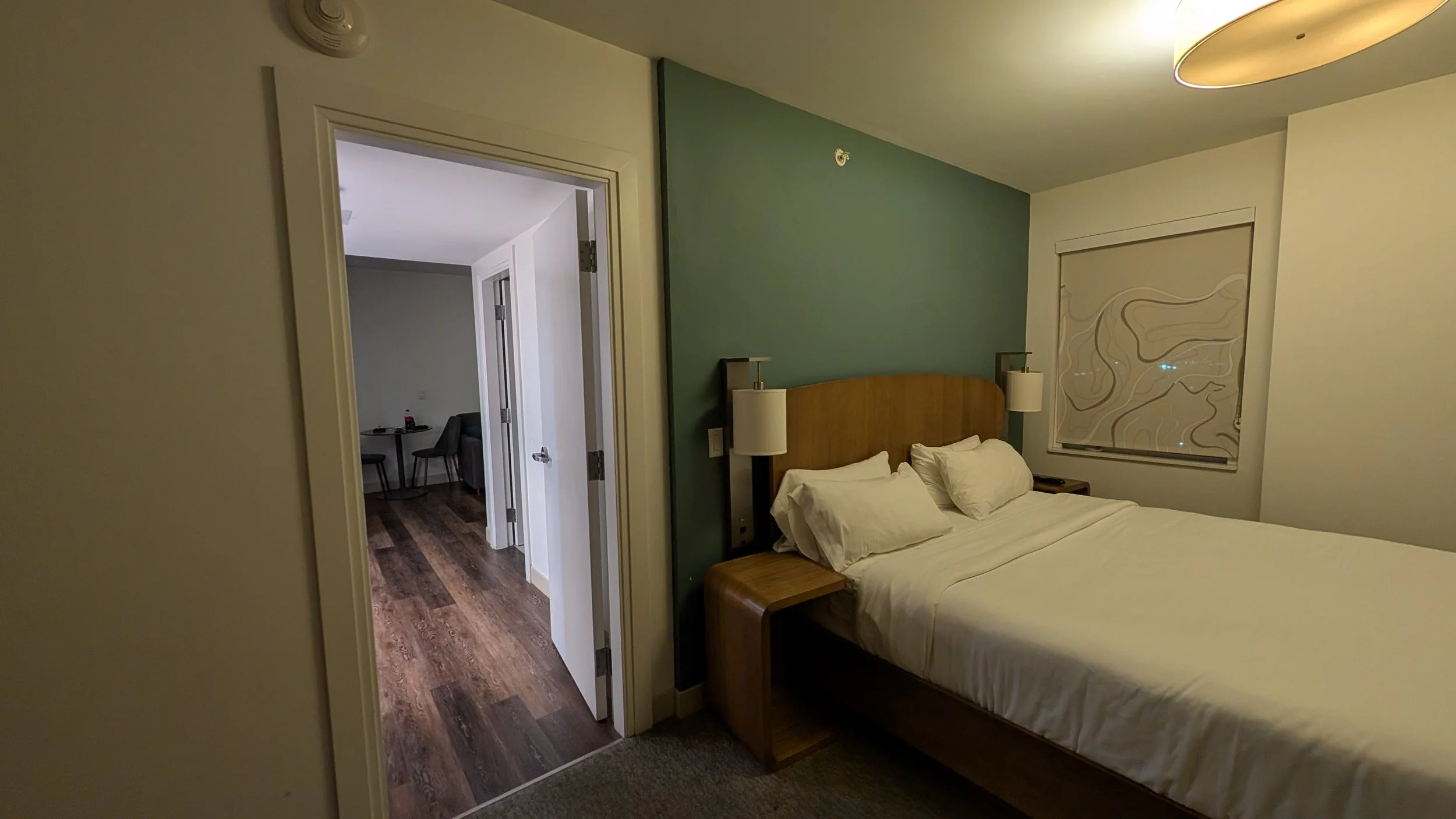
Now, onto one of the trip’s only blemishes - the pre-departure Element Hotel Calgary Airport. I’ll start with the positives: the building itself is nice, my room was immaculately clean, and the breakfast buffet was plentiful.
I think where this hotel suffers is its logistics and front-of-house. I’ve mentioned the infrequent shuttle, which -coupled with its distance from the terminal- makes this a rather inconvenient starting point for the trip.
I finally arrived at the hotel at around 10PM on Day One. There was another individual on the shuttle with me, and I let her check in first. To our absolute amazement, the front desk told her that her “room isn’t ready yet.” Some twenty minutes later (not an exaggeration), she was finally given a room key and sauntered away. Stepping up to the desk (manned by two people seemingly sharing one computer, for some reason…) I was also told my, “room isn’t ready yet.”
I travel more than most anyone I know and I try to be understanding and sympathetic to anyone working in the hospitality industry, but … it was 1030PM by this point. Airport hotel or not, I can’t fathom any lodging dealing with a volume of turnover so late in the evening that would prevent a room from being ready. Anyway, I was upgraded to a suite with a kitchen for my troubles, so … all’s well that ends well?
(As a quick note, the woman who checked in before me came back to the front desk when her room key didn’t work - they wrote the wrong room number on the key holder….)
Transportation
Our tour used a fifteen passenger van towing a small storage trailer for the duration of the trip.
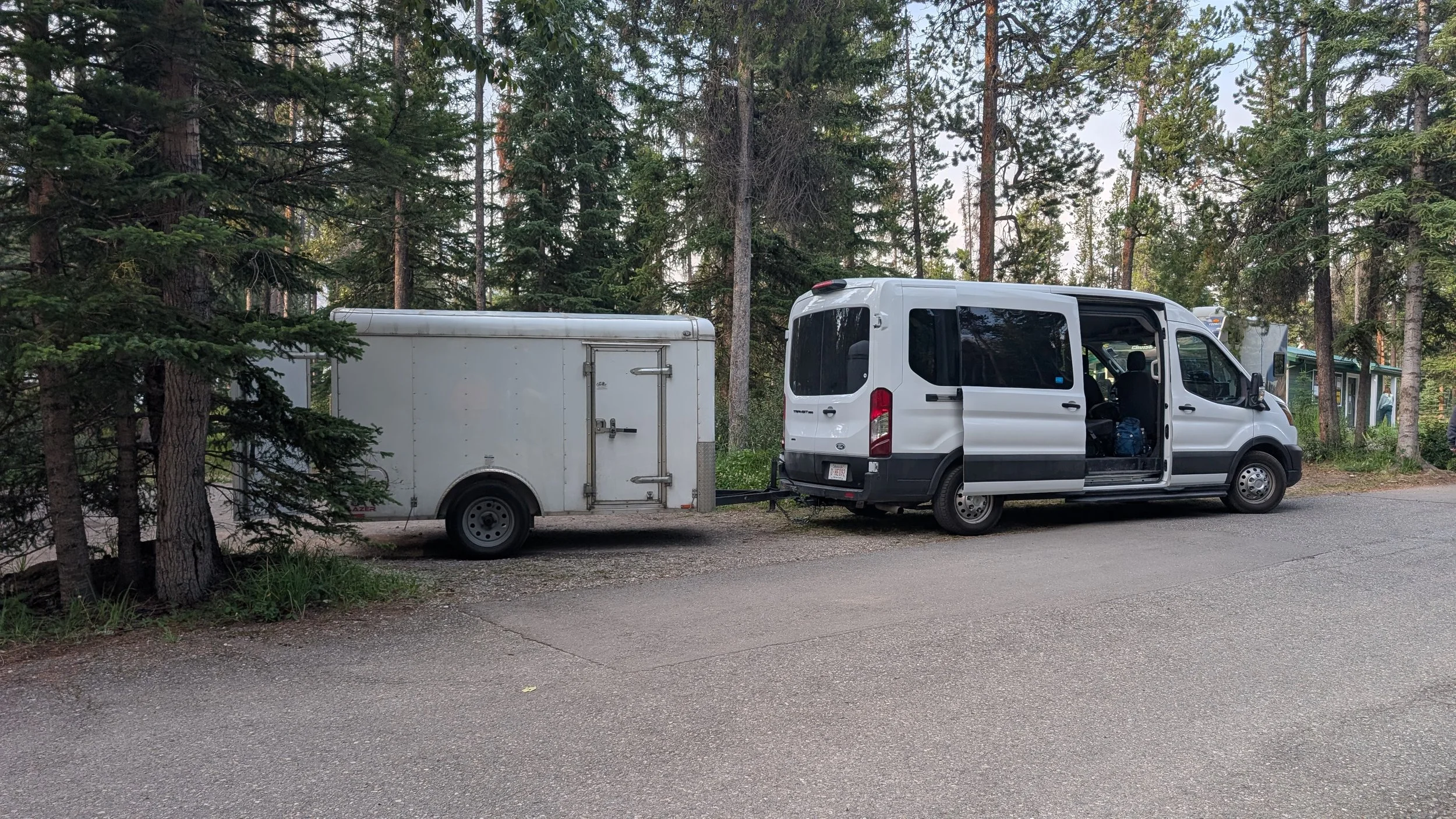
Unless we were moving between campsites, the trailer stayed at the campground during the day. It also did double-duty as a bear-resistant storage unit at night.
The van was … adequate for our group. We were fortunate we only had eleven travelers; I can’t imagine twelve travelers and two guides packed into this thing with full day packs. The frequent stops were more than enough to fend off leg cramps throughout the day. Of note, the van had only a couple of USB-A charging points.
The Guides
Our guides, Marie-Christine (or MC) and Célia, were an absolute pleasure!
Being a guide on this group camping trip is such a demanding task: you have to wake up before everyone else to make coffee, tea, and breakfast, pack up the trailer before departing for the day (finding time to shoehorn personal chores in), drive in some cases a couple of hours, do the group hike while simultaneously being responsible for everyone’s safety in grizzly bear country, deal with people who want to go faster, deal with people who want to go slower, then drive back while everyone else is tuckered out, sneak in a stop to buy groceries or fuel without inconveniencing your clients, prep dinner, clean up the campsite for the evening, and finally listen to never-ending evening ebullience from your guests while trying to catch some sleep. Then wake up the next day and do it all over again.
MC and Célia executed this to absolute perfection. I’d travel with them anywhere.
Finding this review helpful?
Consider a follow on Instagram.
Now back to the review!
Food
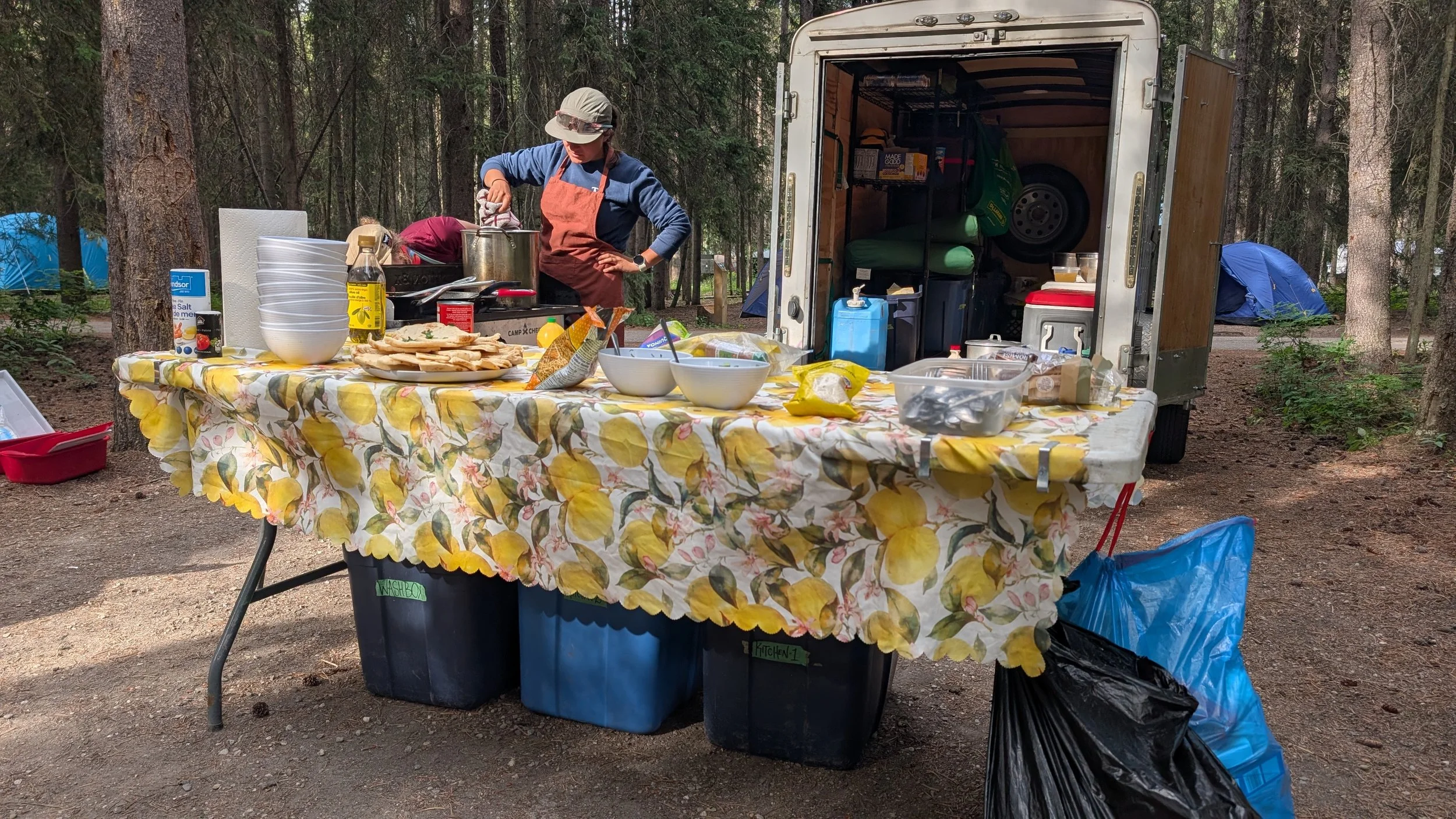
Overall, I thought the selection and diversity of the camp-made food to be good. The guides are limited by the lack of refrigeration, and -having worked many moons ago as a camp counselor- I can tell you cooking en masse in aluminum pots on a two burner propane stove is quite difficult. I have a very bland palate so take this with a grain of salt (pun intended).
I also appreciate that Much Better Adventures catered to food allergies and preferences throughout the trip.
The meals in camp are served pseudo-buffet-style, with each guest generally able to take as much or as little as they want. Servings were plentiful, and I can’t remember us running low on anything specific.
Being caffeine-adicted, I would definitely recommend one change to the kitchen set-up: the french press. I would consider upgrading to the larger 50 ounce / 1.5 liter Java Press vice the 30 ounce / 888 milliliter ones, which are not really scaled for large groups (even three at a time).
Lunch on most days are sandwiches or pasta-based salads served in plastic storage containers and eaten out on the trail. The food storage containers are a bit delicate, so if you are using a tightly-packed daypack, perhaps consider bringing a more sturdy container to avoid spillage.
The meals are enough to get you by, but you’ll certainly want to supplement with snacks, electrolytes, and other drink alternatives besides water, particularly on-trail.
The two choices of restaurant for group meals -the HI Hostel and Banff Social- were good, and I would encourage continued use of them moving forward.
Camping Equipment
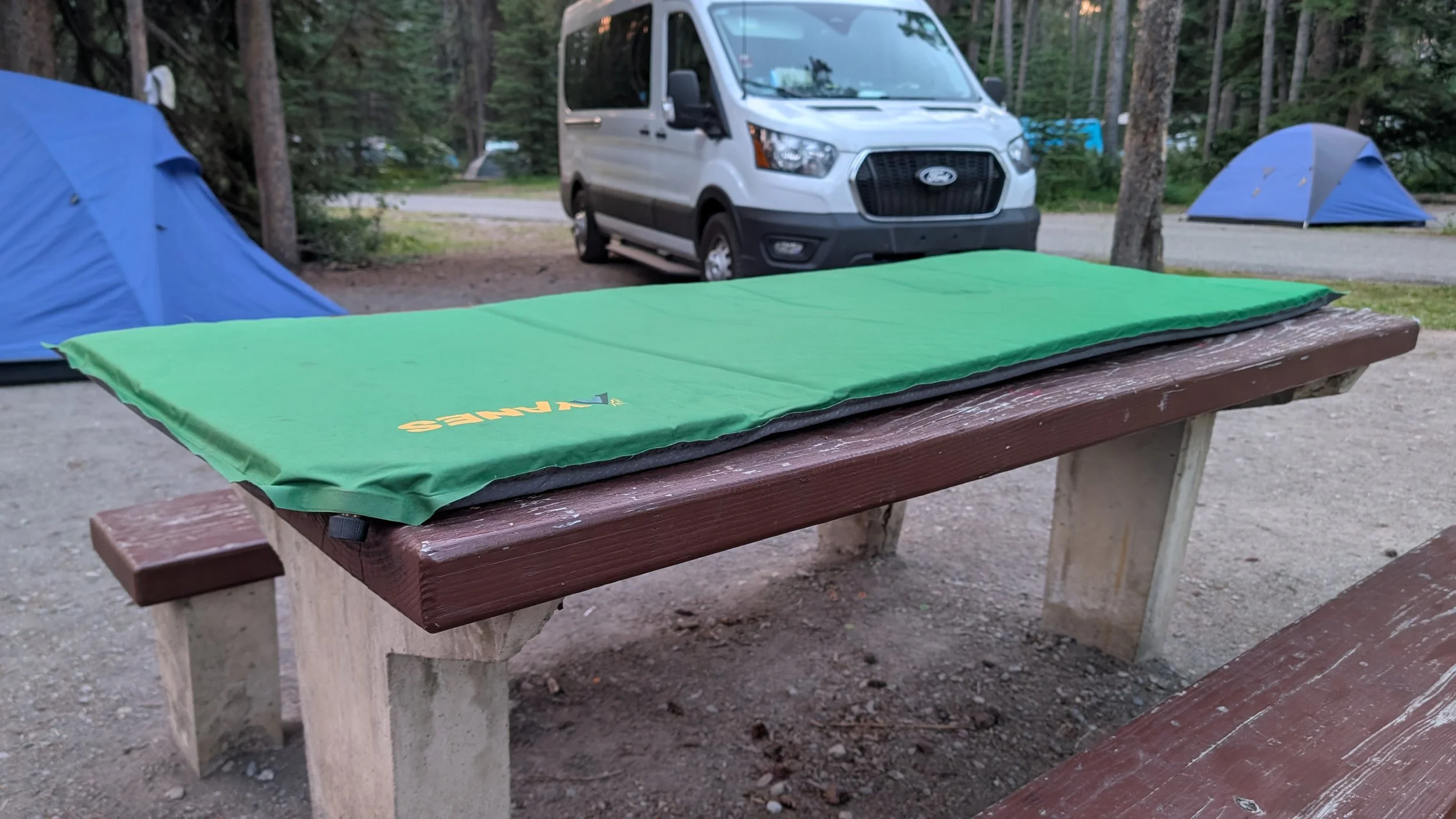
To some extent, here’s one area where I think there is room for improvement. You are supplied two pieces of equipment for your trip: a two-person dome-style tent with a rain fly, and a self-inflating mat.
Because I snore and am not completely evil, I booked my own tent for the trip. I had plenty of room, of course, but it was easy to imagine how tight it would be if I had to share the space with another traveler, along with our hold baggage and our day packs inside. I’m also on the shorter end of life, and I can imagine how someone a bit taller would have a hard time moving around in there. Realistically, a three-person tent doesn’t roll up much larger than a two-person tent, so I’d say when the time comes to refresh the current line-up, give some consideration to an upgrade.
Where I really, really struggled was the air mattress. This is mostly my own fault, having not packed my backpacking air mattress, but -boy- is this thing quite thin and, frankly, quite uncomfortable as a side sleeper. I understand the need for a self-inflating mat for hygienic purposes, but I can’t fathom that there isn’t a more plush option out there that takes up significantly less space rolled-up than this one does. To be transparent, I had to but a secondary foam mat in Lake Louise to get through the night.
Logistical Considerations
What to Pack
As I’ve mentioned, I think the packing list provided by Much Better Adventures was pretty spot on. There are some things I want to (re)emphasize you bringing for a better experience:
Earplugs: Definitely need these at night for the loud freight trains that roll past the campsites.
Power banks: The ability to charge electronics is extremely limited, a power bank will make your life significantly better.
Your preferred inflatable mattress: As mentioned, the stock air mattresses are thin and very rough on side sleepers.
Bug spray: DEET is your best friend - seriously, the mosquitoes can be insufferably bad.
Sturdy lunch container: As a replacement for the thin plastic one provided.
Lots of snacks, drinks, and supplements: You will want these both on the trail and in camp.
Breakdown of Additional Costs
Most every major expense is covered as part of your tour package besides three dinners and your contribution to the tipping kitty. Plan on 30 to 50 Canadian dollars for each of the dinners (Banff, Lake Louise, Revelstoke, etc. are all very expensive tourist towns). Please consult the provided tipping guide provided by Much Better Adventures, but remember: cash is king.
There are other ancillary expenses -such as snacks, food, coffee, souvenirs, etc.- that you’ll encounter along the way. I don’t recall a time when at a point-of-sale the vendor not taking a debit or credit card … even at the teahouse along the Plain of Six Glaciers … but it is wise to have some paper currency on you.
A reminder that the Canyon Hot Springs Campground showers require single Canadian dollar coins; the laundry machines require coins, as well.
Wildlife & Wildlife Safety
We encountered very little in the way of wildlife on our trek … which, in the Canadian Rockies is actually a good thing. We did see a couple of black bears from our tour vehicle, as well as an elk on the roadside. We saw bighorn sheep at a distance while on foot, but -otherwise- the trail was generally uneventful when it came to animals.
To be clear, the guides both carried bear spray and traveled at the front and back of the hiking group. While the campsites were surrounded by safety fencing, the guides ensured that odorous items were placed inside the trailer at night and during the trekking day. I had no concerns at all with regard to wildlife safety during the trip.
Overall Trek Difficulty
Much Better Adventures classifies this trip as “Moderate-Challenging,” or Level 4 out of 7, which they define as:
For adventurers ready to take on longer, more demanding days. Active days typically 6-7 hours, with some longer days.
Other’s I trekked with may disagree, but I think this is a very fair characterization.
As far as route selection on a multi-day, out-and-back hiking trip, the truth of the matter is that there is never going to be one itinerary that suits everyone’s needs perfectly. I am certain some will think this trip is overly ambitious, while others probably wish it were a bit more challenging.
I definitely fall right in the middle: I genuinely think the order of the hikes we did was very good, building slowly up until the spectacular finish at Cory Pass.
For those who think the trail selection could be more difficult, consider this: the paradox of out-and-back hiking routes is that it simultaneously makes logistics both easier and harder. While you don’t have to worry about moving a transport vehicle from the starting point to the finishing point, you also have significantly less slack when it comes to group pacing and distance since -ideally- everyone needs to finish the trek at around the same time. Given that these treks have to be oriented in this way, and given that all the treks were completed safely and bang on-time, I’d say the difficulty and pacing was exactly where it needed to be.
Should Much Better Adventures consider a Level 5 or 6 version of this trip? Absolutely, and I’d be first in line for it … but that’s a conversation for another day.
For those concerned, there is very little technical skill required to complete these hikes. Broadly speaking, the treks are on well-groomed and marked hiking paths mostly consisting of dirt, with the occasional scree or tree-rooted stretch thrown in for good measure. The uphills and downhills are mostly demanding, but not overly challenging.
The exception is Cory Pass, which does require some very, very brief rock scrambles as well as a sharp, long descent along loose dirt.
If you can do 10 miles / 16 kilometers on a mountain trail on back-to-back days, you will be technically capable of completing this trip.
If you are overly concerned about completing Cory Pass, talk to your guide - they will be happy to let you spend time in Banff rather than make the trip.
My Opinions
The Best Parts of This Tour
As an avid hiker and landscape photographer, this trip obvious checked a lot of my boxes. I enjoyed all the hikes, but the two stand-outs for me were Katherine Lake and Cory Pass. The density of hikes -particularly compared to similar options from other tour companies- is exceptional. I also greatly appreciated the diversity of wonderful mountain vistas and beautiful lakes chosen for this itinerary.
I’ve already spoken about this at length, but -to reiterate- I thought the hike pacing was great. What I haven’t really mentioned yet is the down-time we had at the end of each day. Oftentimes when you go backpacking, for example, your days become never-ending cycles of rise-eat-hike-dinner-sleep; similarly, when you are on sightseeing tours, it goes breakfast-drive-sightsee-drive-sightsee-dinner-sleep. I felt I had the perfect amount of downtime at the end of each day to decompress, and mentally and physically prepare myself for the following day.
Lastly, and once again, I also greatly appreciated MC and Célia, who kept us on-time, safe, well-fed, and well-rested!
What I Would Change About This Tour
As I’ve stated many times in my tour reviews: rarely are trips perfect, but you shouldn’t necessarily take recommendations for changes as harsh criticisms, but rather as an opportunity to improve. That is certainly the case here. I’ve covered four of the five areas for improvement above, but I’ll rehash them real quick:
Consider changing the starting hotel: The Element Hotel Calgary Airport is a bit too far away from the terminal, has a chaotic front-of-house, and a rather infrequent shuttle schedule,
Reconsider the current coffee dispensers: The reality is that the small, personal-sized french press containers are not adequate for a large group,
Consider upgrading to three-person tents when the time comes to replace them: The extra interior space makes a huge difference for a relatively insignificant penalty while transporting, and,
Please improve the sleeping pads: Sorry, but they are not good.
The final area may come as a shock based on my otherwise glowing comments above but … it is the schedule. Specifically and singularly, I am referring to the rest day at Emerald Lake. Whether intentional or not, four hours was an incredible amount of time to spend there. Now, I recognize three factors primarily drive the decision to have the group take a rest day here rather than do an activity:
Some people appreciate a rest day (no hate there),
The guides need a break, too, as well as the opportunity to refuel and resupply, and,
Breaking up the crew on trail is probably frowned upon, if not straight-up prohibited.
That said, being so, so close to the Iceline, the Highline, and the Yoho Pass Trail and not being able to hike any one of them triggered my FOMO more than I thought it would (and certainly more than it reasonably should).
More a wish than a recommendation, but perhaps it would be permissible to have an optional hike between Takakkaw Falls and Emerald Lake -similar to this trail, but in reverse- for those of us who can’t sit still.
Why You’d Want to Book the Hiking in the Canadian Rockies Tour
If you are considering this trip, you’re probably already a recreational or even avid hiker, and willing to put up with some camping-related inconveniences. Furthermore, you probably understand there isn’t much to be gained by the “local knowledge” leveraged on more traditional group tours since the spectacular beauty of the Canadian Rockies is -for the most part- self-explanatory.
So, fundamentally, choosing to book this trip boils down to whether or not you believe the cost of this tour offsets headache of arranging transportation, food, camping supplies, bear spray, permits, and other logistical complications that would accompany self-planning a Canadian Rockies hiking trip over ten days.
For me, this is a resounding yes. The added value of safety-in-numbers is a nice cherry on top. Unless you are able to arrive in the region by car (which most people reading this won’t be), I suspect you’ll ultimately agree with this assessment.
The question then becomes: do you choose the camping option, or the hotel option?
Why You Would Not Want to Book the Hiking in the Canadian Rockies Tour (Camping Version)
If you’ll recall long, long ago, I mentioned that Much Better Adventures’ tremendous growth is driven by a spectacular social media marketing and advertising campaign. Well, this may have come with a consequence. Let me explain.
Looking back on my experience now, I can’t help but consider that the camping version of this tour was an “18-to-Thirty-Something” tour wearing other clothes. It makes sense when you reflect critically at the demographic Much Better Adventures targets in their advertising, and the forums on which they do this advertising. I know who Much Better Adventures wants on their tours, and -well- it ain’t me. I also know who their target demographic wants on their tours and -again- it ain’t me.
Before you Gen Z’ers condemn me as the opps, or a sus Boomer, or whatever other nonsense y’all say, do note I have absolutely zero problems with 18-39 tour groups. Damn it, I was on 18-to-Thirty-Something tours before you were even alive (no, the irony of this comment is not lost on me). No hate to y’all, go live your lives!
That said, I am certainly not alone in thinking the 18-to-Thirty-Something mindset doesn’t jive well with those individuals -myself included- who are looking for a restful, contemplative hiking experience in a beautiful part of the world, particularly when day-after-day you are forced into an inescapable, multi-generational pressure cooker with absolutely no relief valve.
Putting aside the discussions about thin air mattresses, freight trains at all hours of the night, small tents, and first-world-problem coffee carafes, this singular issue should dictate your answer the question of whether you should opt for the camping option or the hotel option.
Allow me to be blunt: If you seek a quiet hiking experience, pay the mark-up for the hotels, hope the 18-to-Thirty-Something crowd opts for camping … and enjoy your spa treatment for me!
I’ll certainly update this page if I think of anything else to add, but that’s about it for now. If you have any specific questions, or if you have been on the Hiking in the Canadian Rockies tour with Much Better Adventures and have more feedback, please reach out to us at hdhuntphoto@gmail.com or drop a comment below!